What are magnetic tiles?
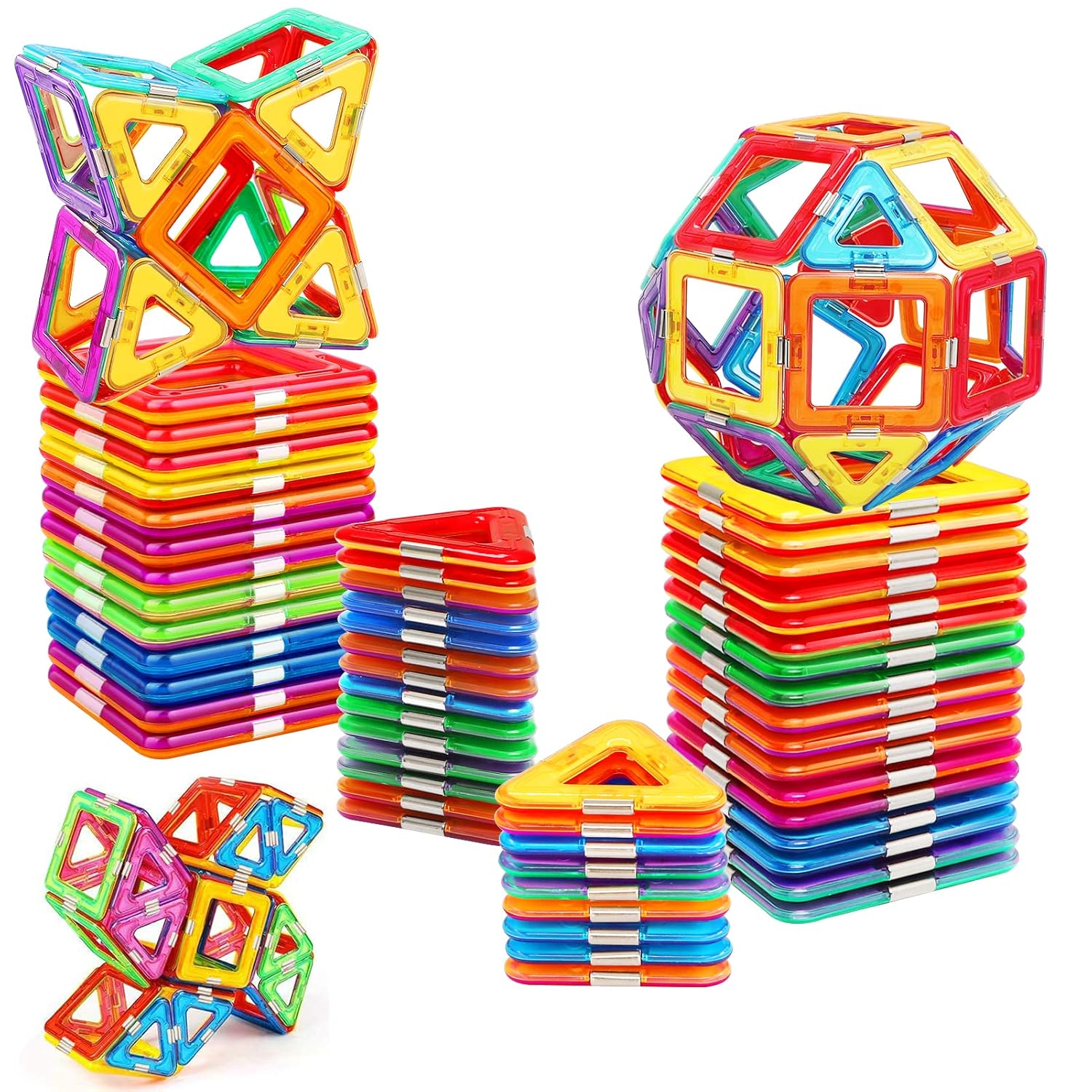
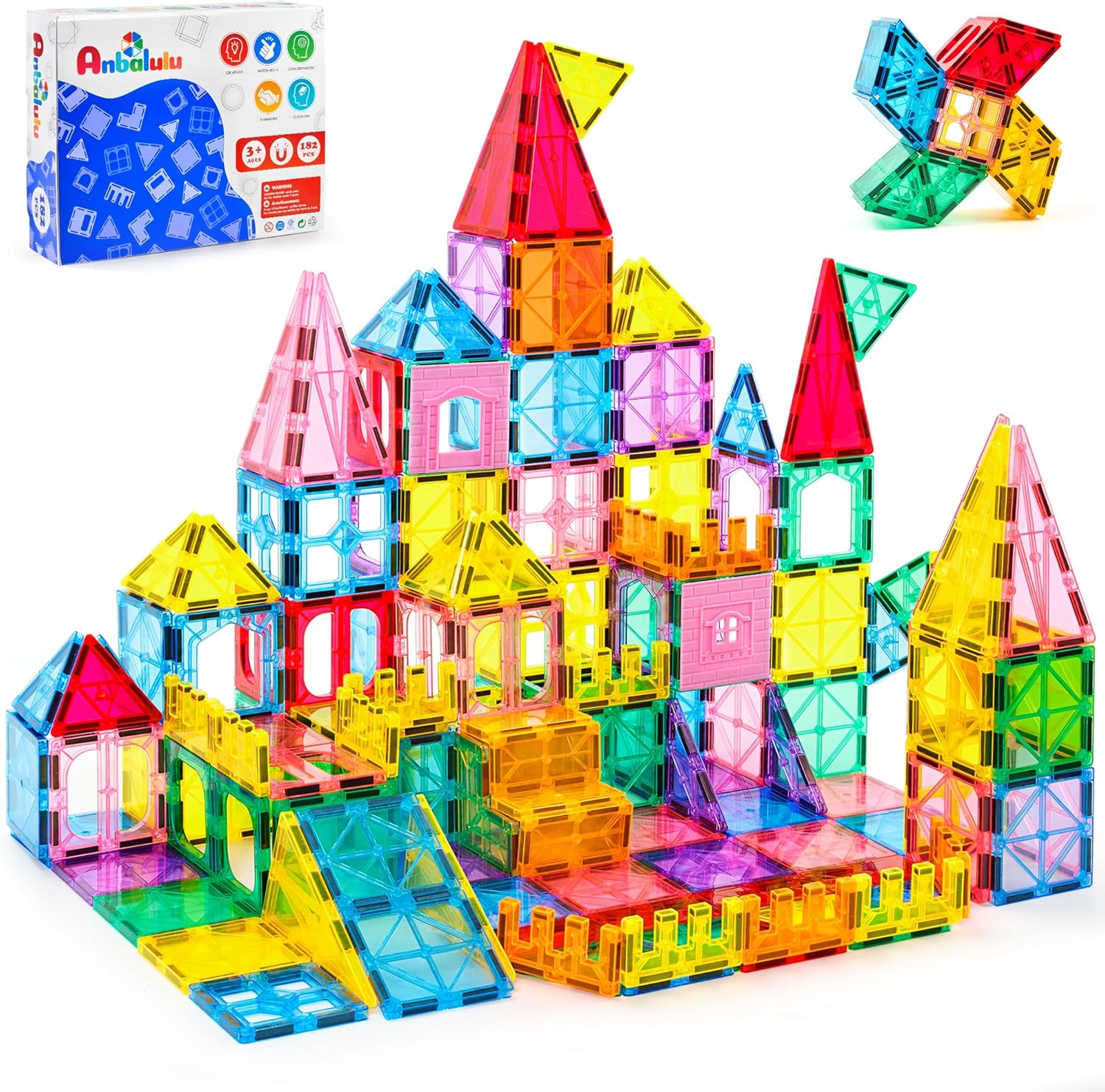
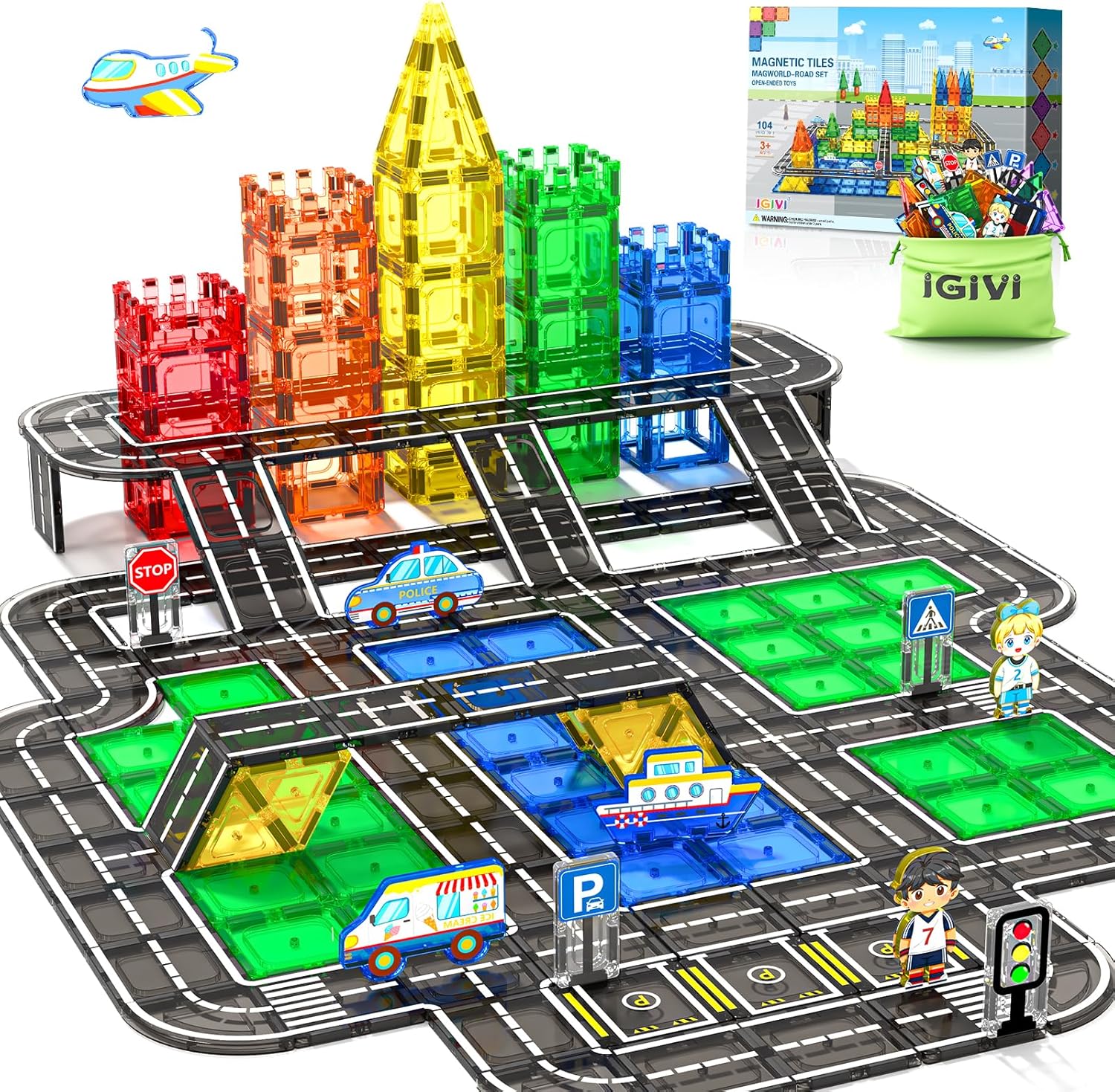
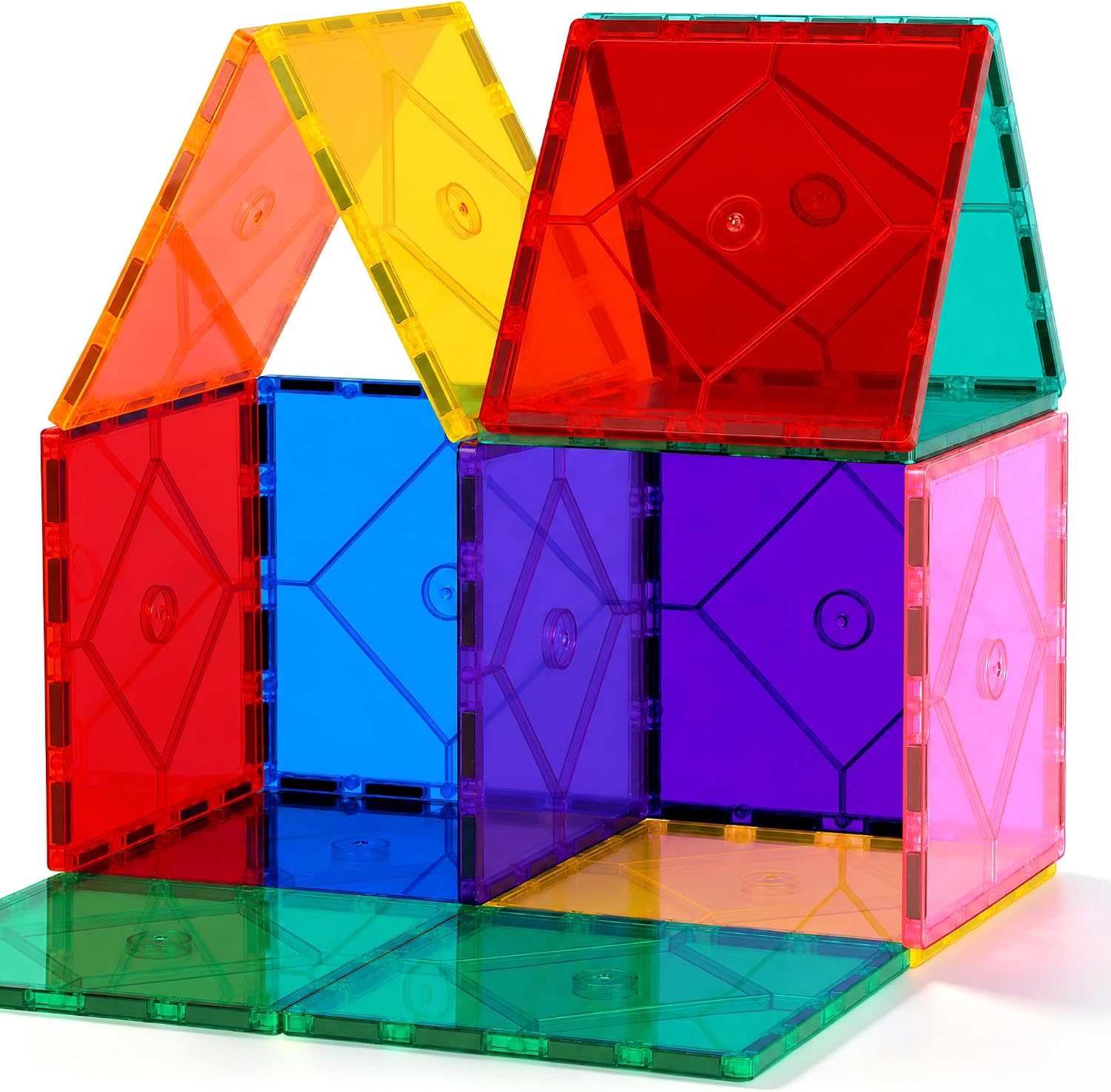
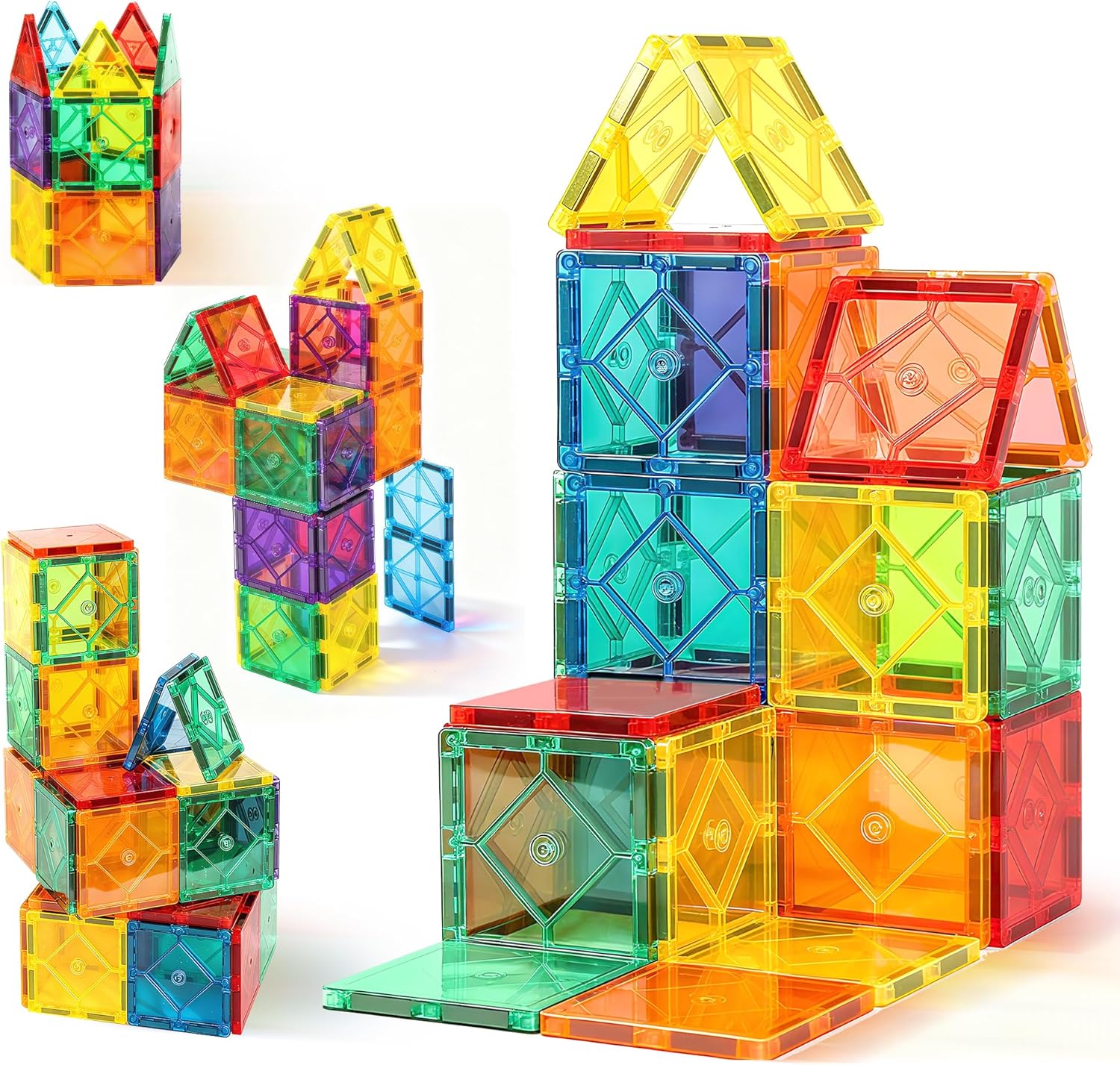
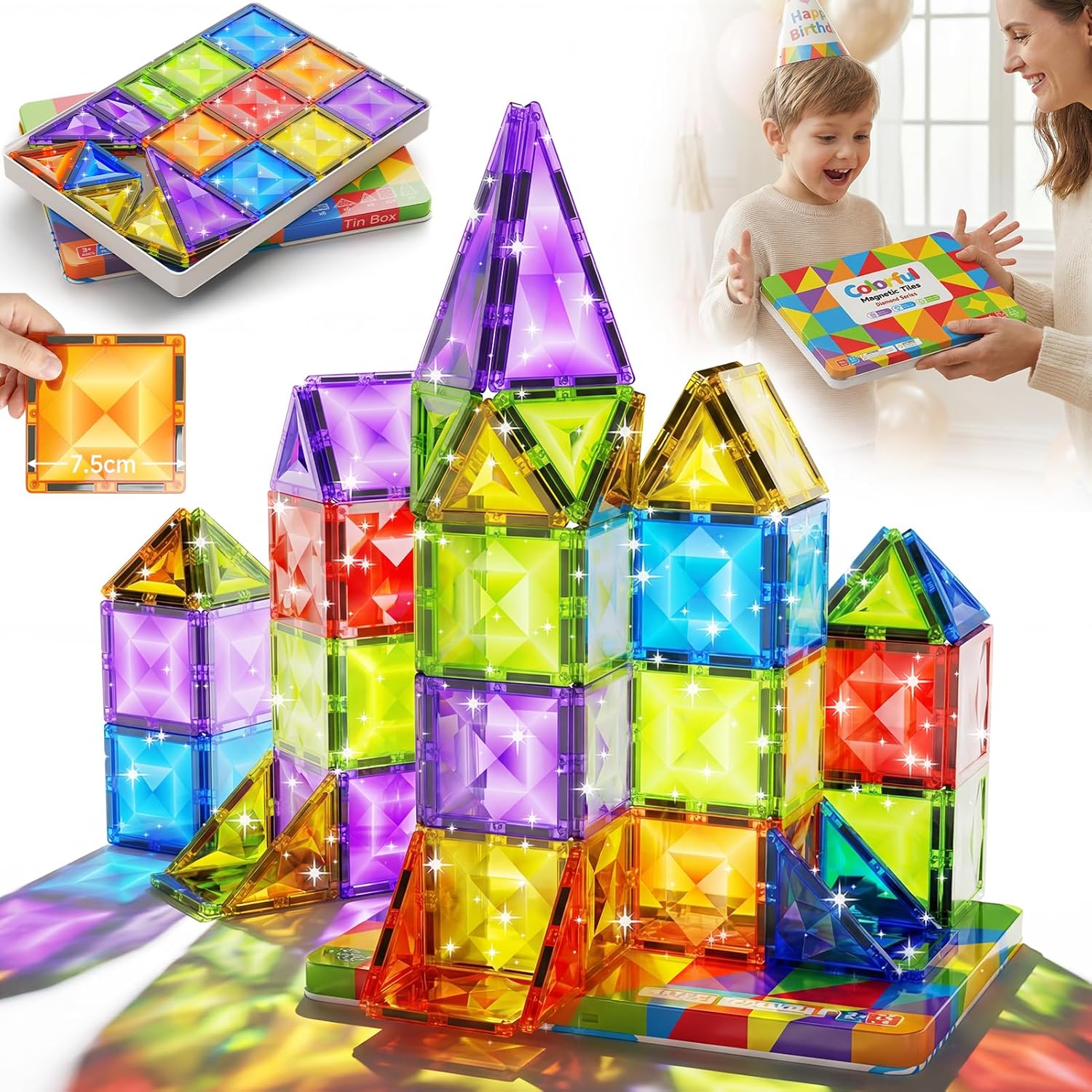
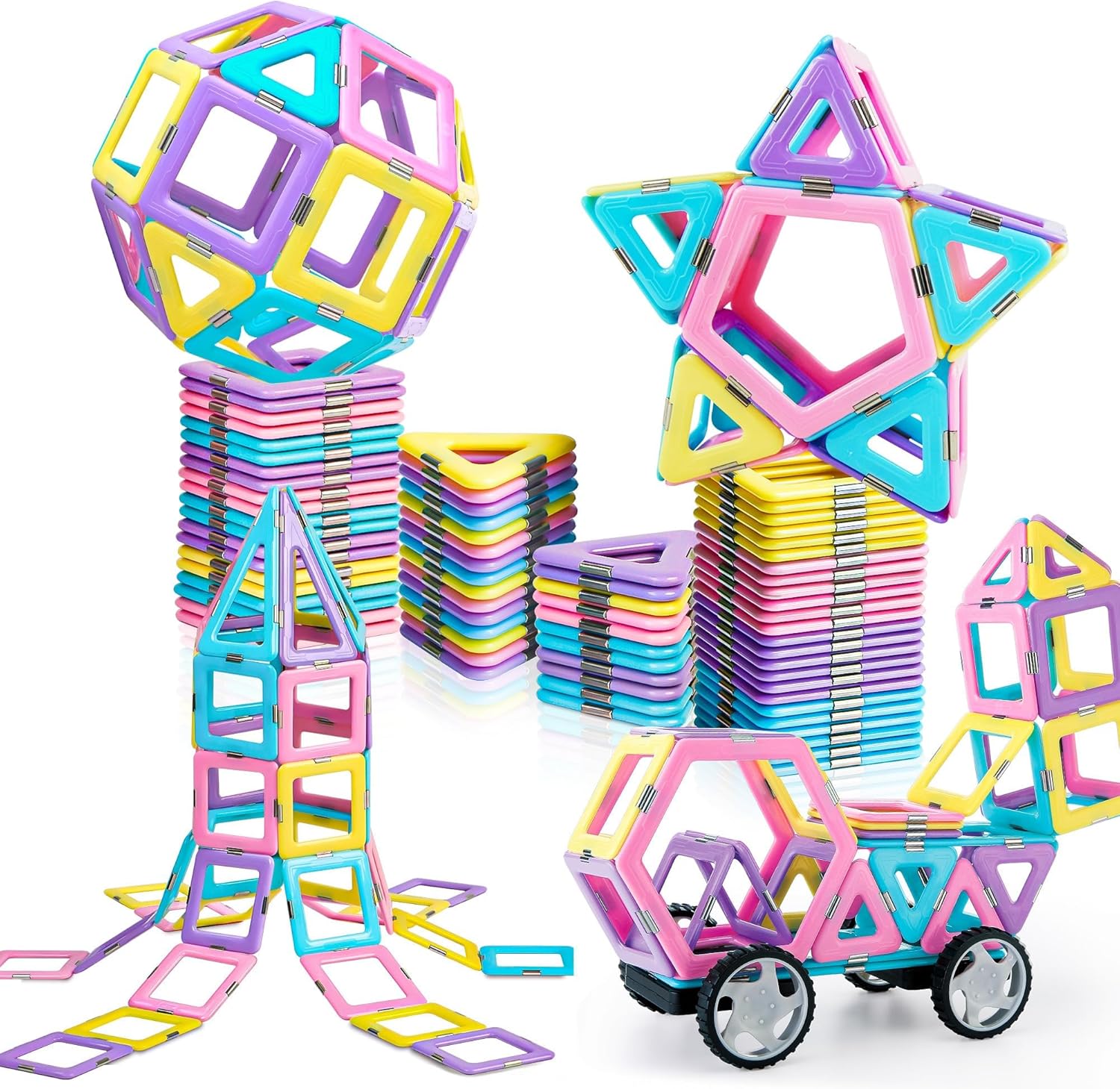
Magnetic tiles are flat geometric building pieces — usually squares, triangles and pentagons — with magnets sealed inside the frame. The magnets are free to rotate, so any edge attracts any other edge instead of repelling. Children build flat patterns, fold them into three-dimensional solids, and stack them into towers, houses and vehicles.
What is the difference between Magformers, STICK-O and TILEBLOX?
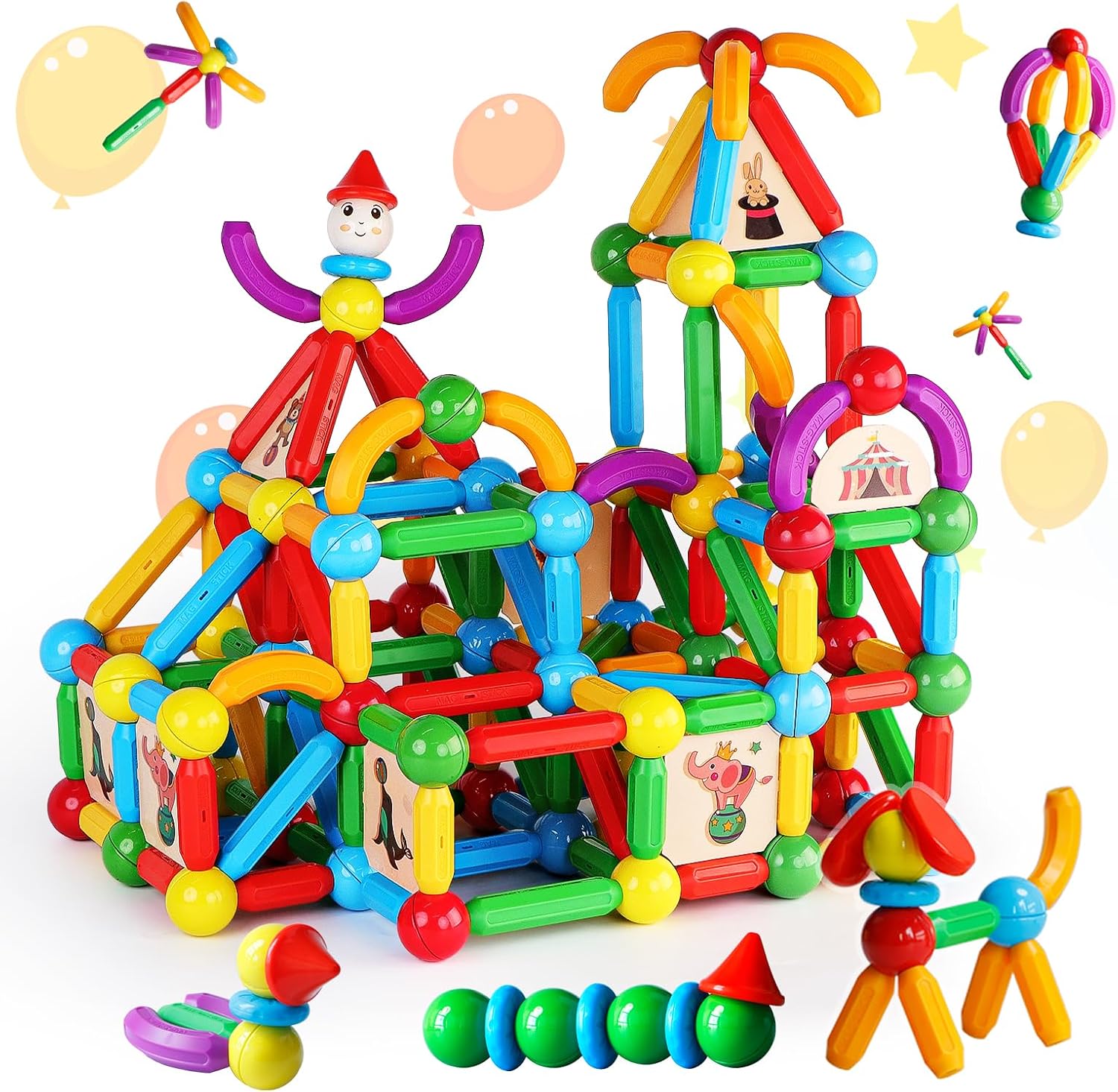
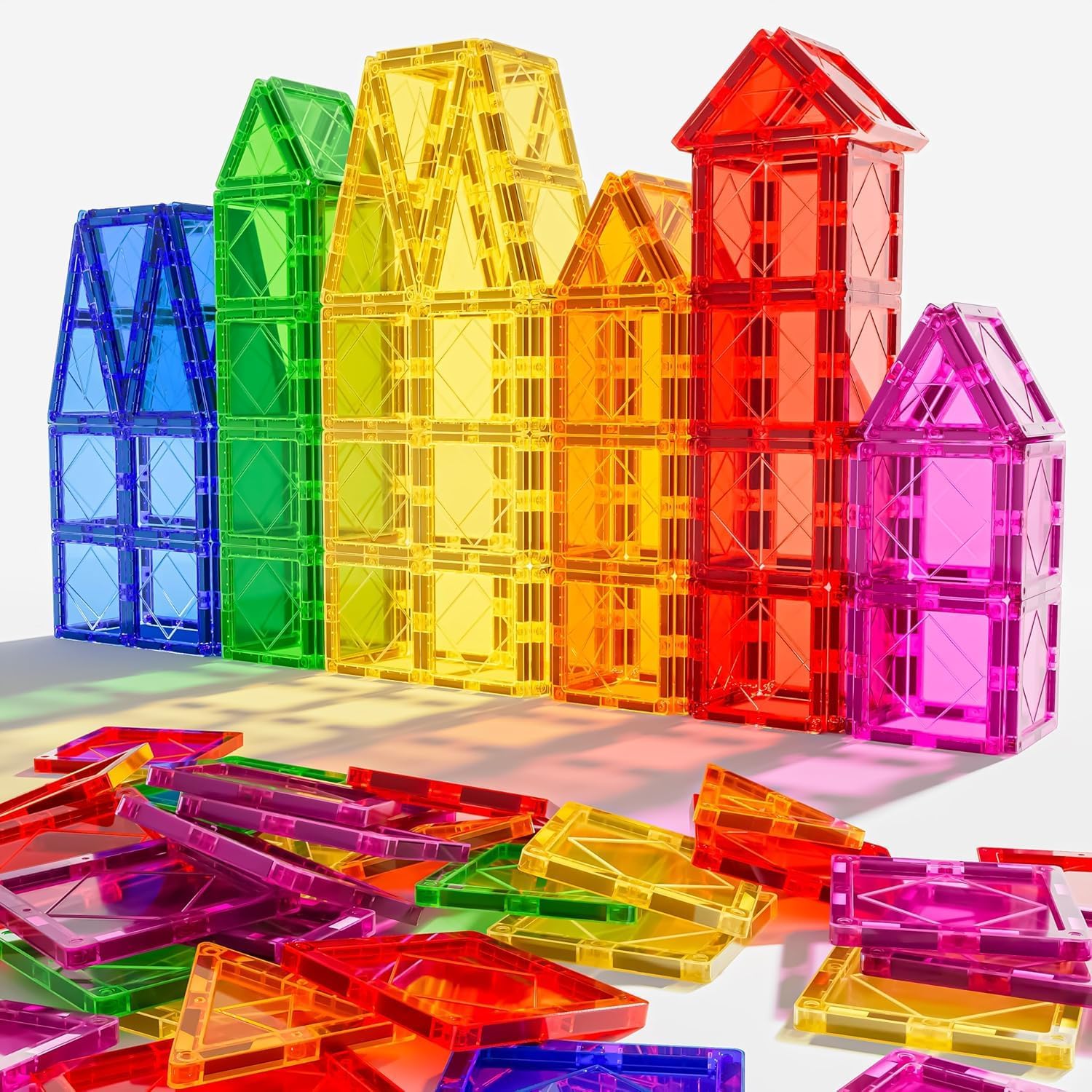
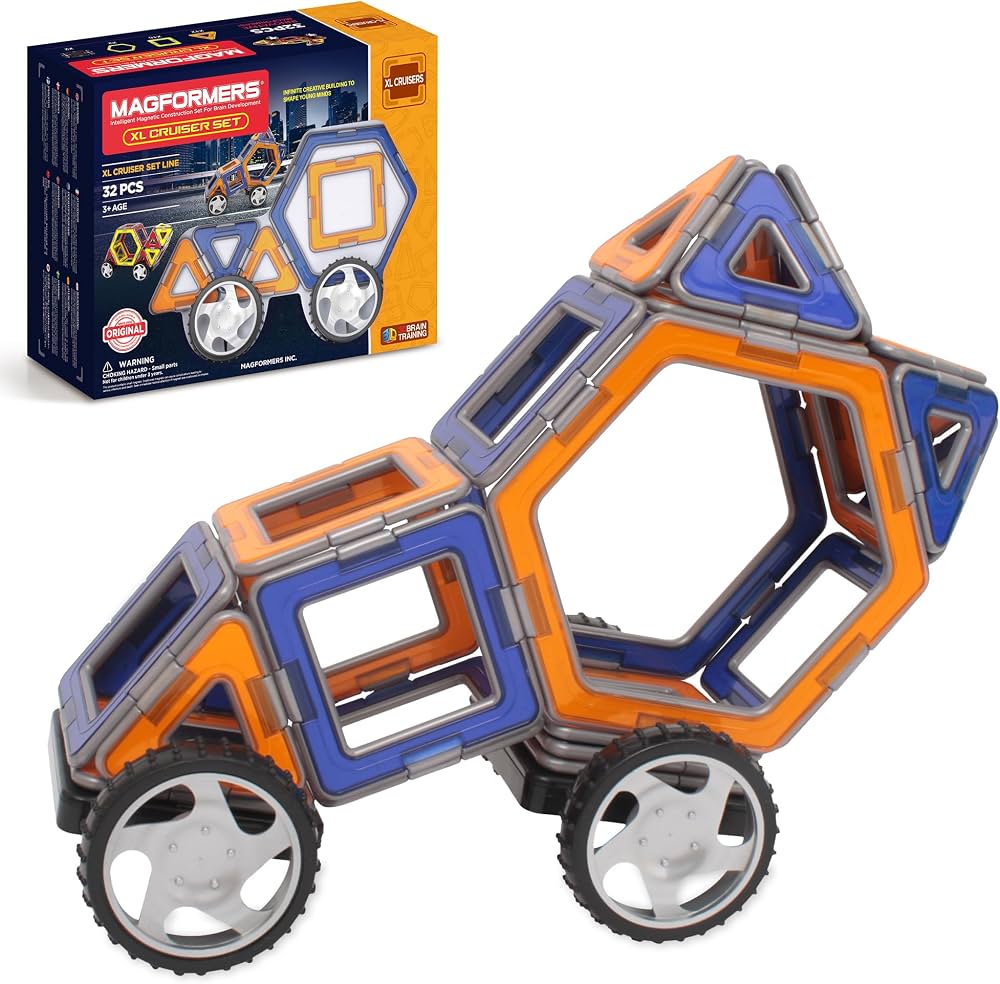
Magformers pieces are open frames you can see through. TILEBLOX pieces are the same idea with a solid, often translucent panel filling the middle. STICK-O is the toddler line and uses chunky rods and balls instead of flat plates. All three come from the same product family and are designed to work alongside each other.
What age are magnetic tiles suitable for?
Standard tile sets are generally graded from three years because they contain small parts. STICK-O is graded from around eighteen months. The most intense years of use are usually four to eight, and many children keep building well into double digits.
Are the magnets in magnetic tiles safe?
In well-made sets, magnets are sealed inside moulded plastic and are not intended to be accessible. Loose high-powered magnets are genuinely dangerous if swallowed, which is why any cracked or damaged piece should be binned immediately rather than repaired. Our safety centre explains what to check and what to do if you suspect a magnet has been swallowed.
How many pieces do I actually need?
Thirty is the number that suits most first purchases: enough for a two-storey house and a decent tower, small enough to tidy quickly. Fourteen works as a test or travel set. Sixty and above suits siblings, classrooms or a child who builds daily.
Which set should I buy first?
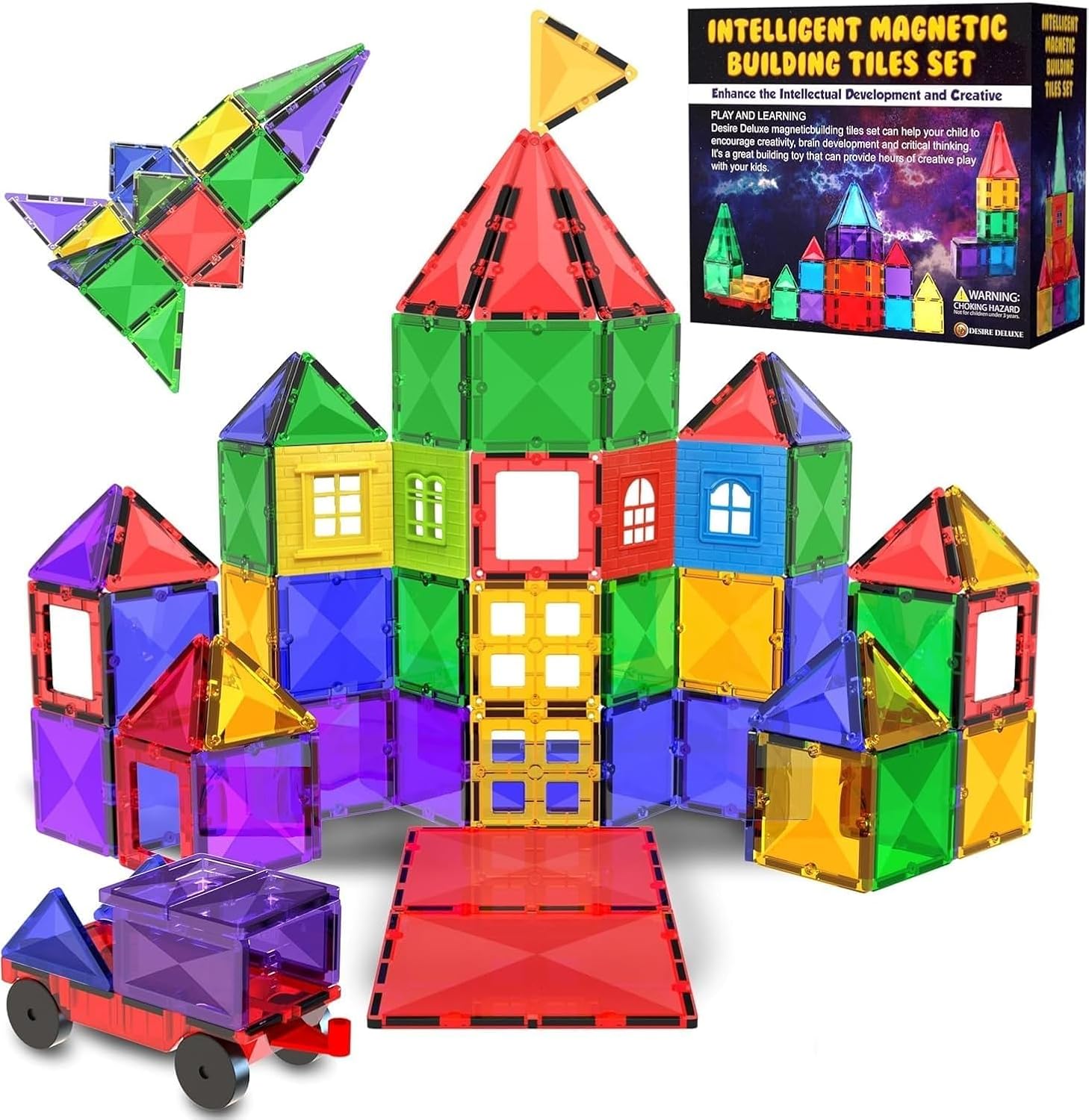
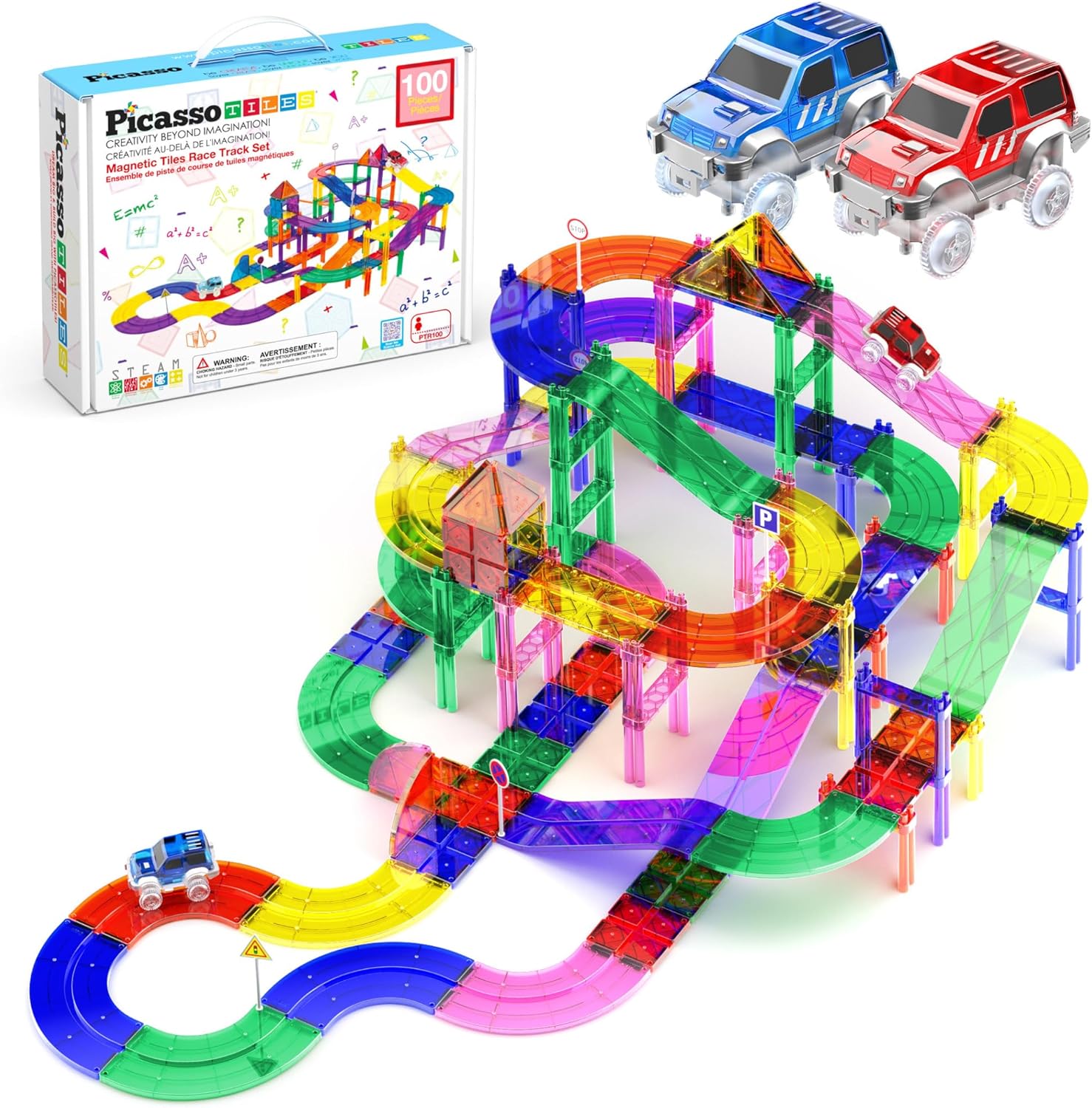
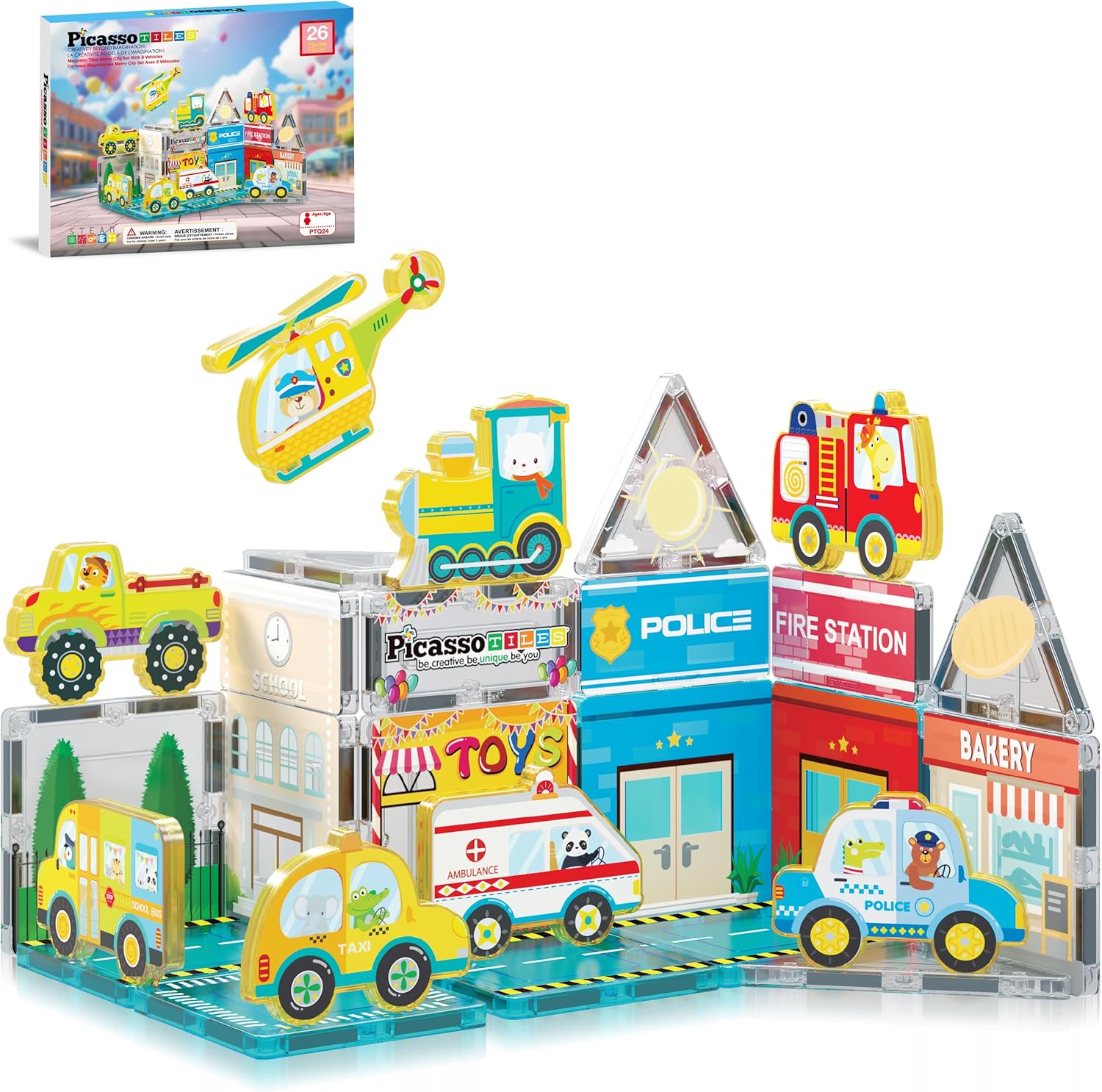
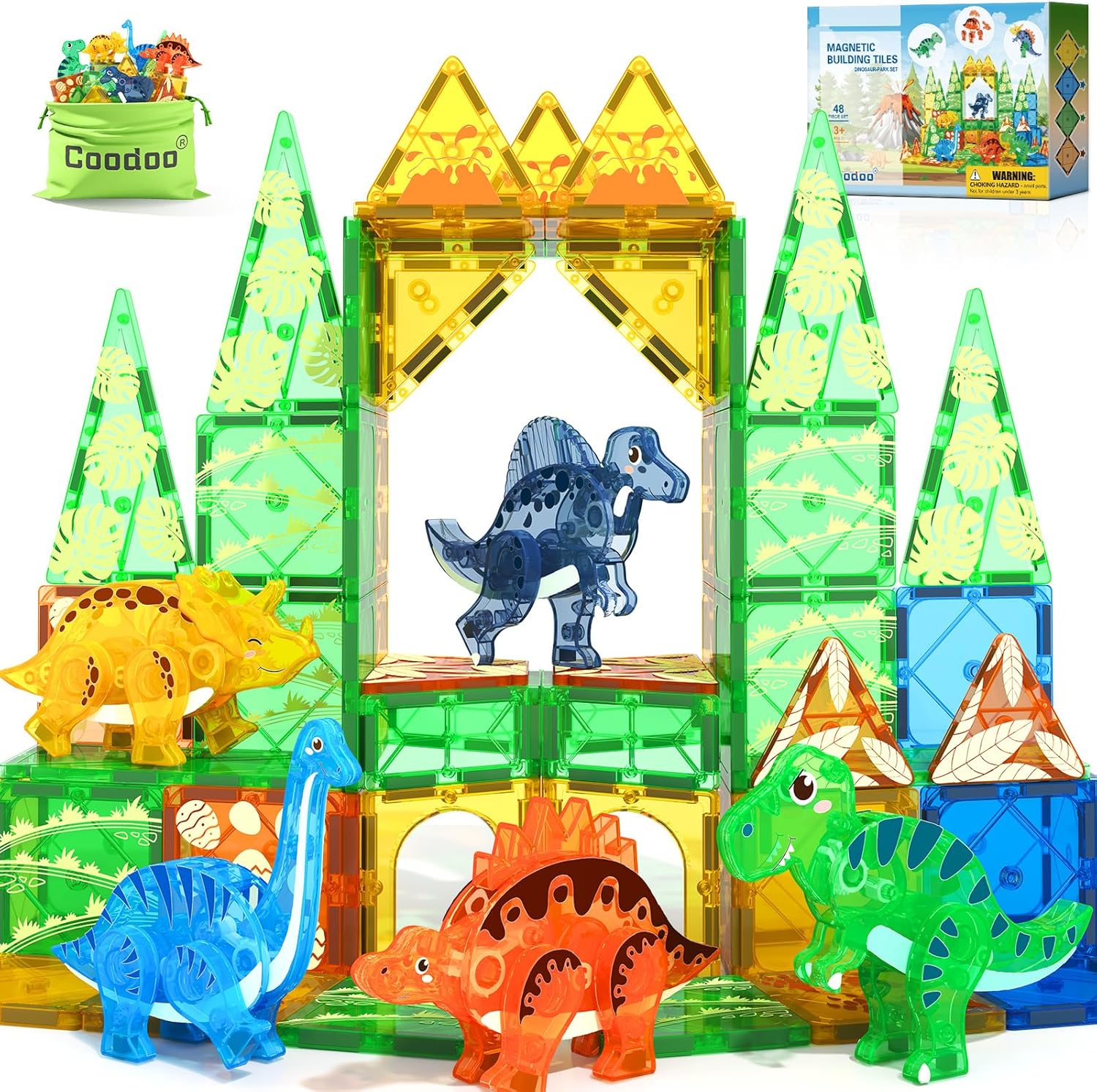
A plain rainbow set of around thirty pieces for a three- to five-year-old; STICK-O for a toddler; a Deluxe or Educational assortment for a confident builder of five and up. Themed boxes such as vehicles, houses or dinosaurs work better as the second purchase than the first.
Do magnetic tiles from different brands work together?
Standard-sized tiles from different brands usually attract, because the magnet positions along the edges follow a common layout. Frame thickness, magnet strength and exact dimensions vary though, so mixed structures can be less stable. Sticking to one family gives the most reliable results.
Can magnetic tiles damage phones, laptops or medical devices?
The magnets are strong for their size but the fields are small and short-range, and modern phones and laptops are not affected by ordinary contact. Anyone in the household with a pacemaker or implanted cardiac device should keep magnets away from the implant site and follow their clinician's advice.
How do I clean magnetic tiles?
A damp cloth with a little mild soap, then dry immediately. Do not soak them, do not put them in a dishwasher, and do not use solvent cleaners — water trapped inside a frame can corrode the magnet and cloudy plastic is permanent.
Are magnetic tiles worth the money?
Judged on hours of use per pound, they are one of the better-performing toys in a typical house, mainly because there is no single correct outcome and therefore no point at which the toy is finished. The caveat is storage — a set kept in a cupboard gets used a fraction as much as one kept where the child plays.
Do they stick to the fridge?
Yes, and it is worth showing a child on purpose. Building vertically on a steel fridge door is a genuinely different structural problem from building on the floor and often restarts interest in a set that had gone quiet.
What should I buy as a second set?
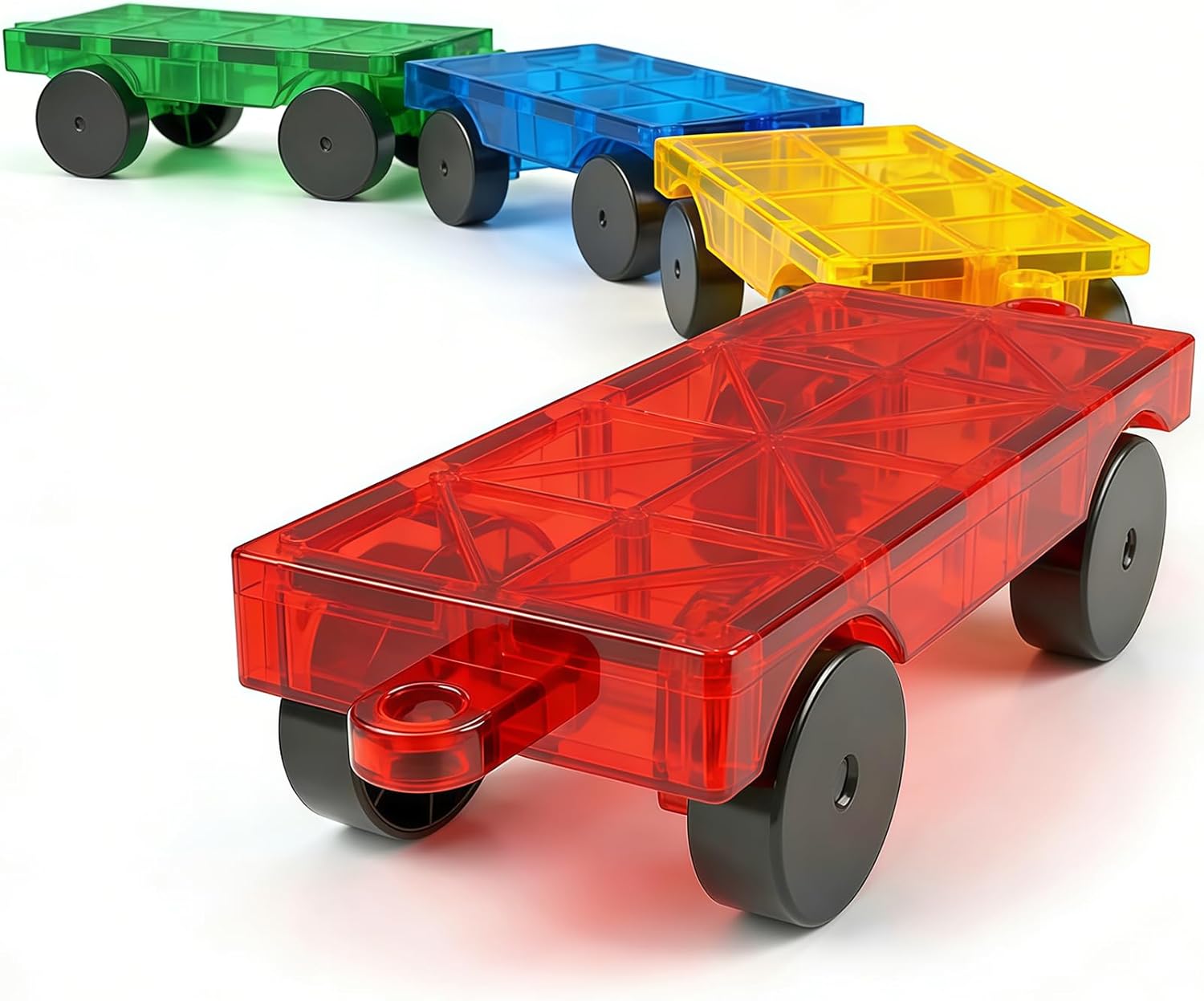
Wheels. A wheel base costs a fraction of a large box and roughly doubles the number of things a child can imagine building, because every existing structure can suddenly drive.