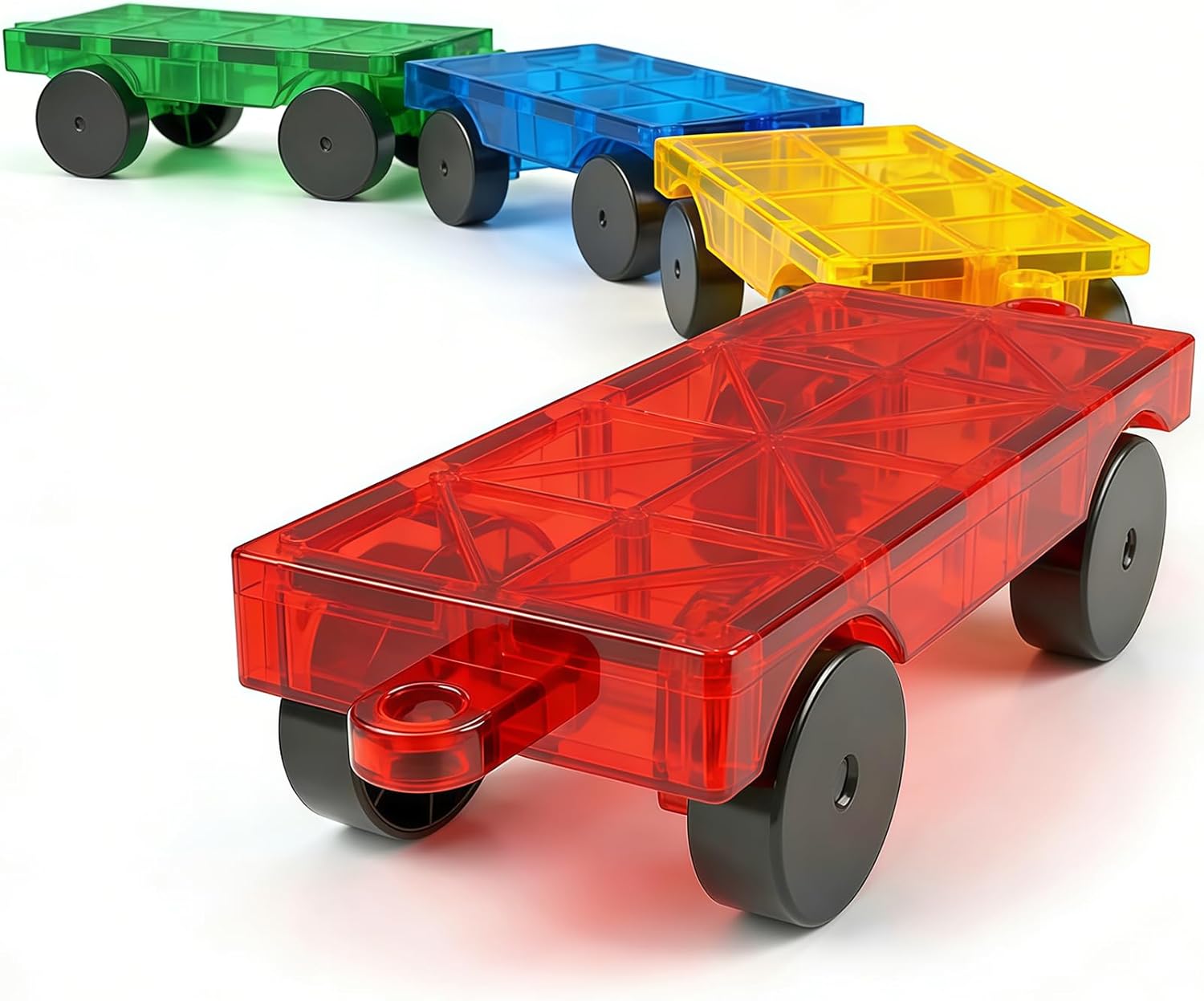
Track & motion
SKY TRACK Magnetic Tiles
Elevated track that turns a static build into something that moves.
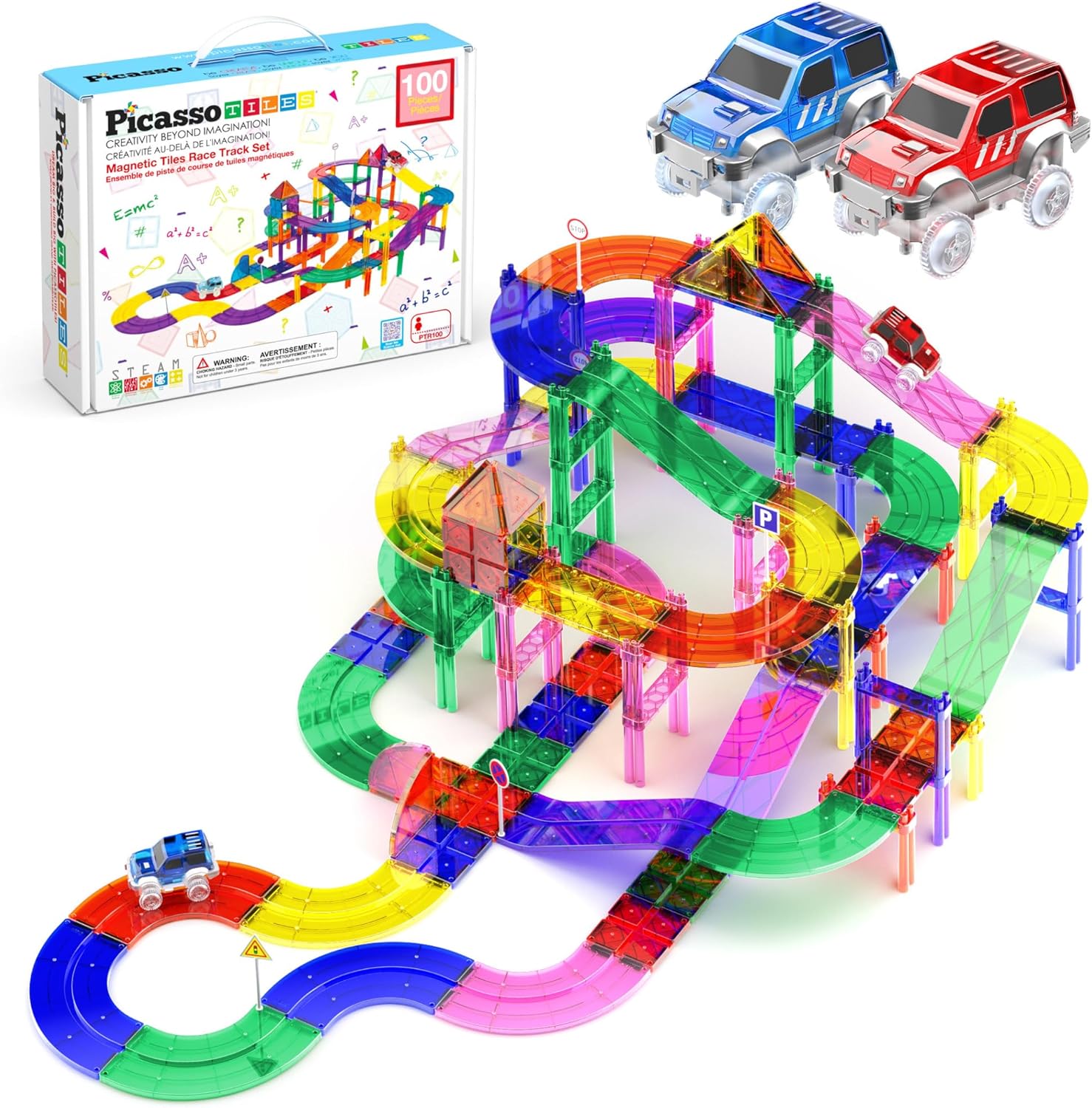
SKY TRACK adds elevated rails, ramps and support structures to the magnetic tile system, so a tower stops being a tower and becomes the pillar holding up a racetrack the child designed themselves.
Why track changes the play
There is a ceiling to static building. A child builds a tower, admires it, knocks it down, builds it again — and after enough repetitions the loop closes. Adding track breaks the loop open, because now the build has a job. Does the car reach the bottom? Does it fall off the corner? Is the slope steep enough? Every one of those questions sends the child back to modify the structure.
That is the real educational value here, and it is a step up from ordinary tile play. The child is running experiments with gravity, slope, momentum and structural support without anyone framing it as science. A track that is too shallow teaches more than one that works first time.
Practically, SKY TRACK sets combine straight and curved track sections with supports that clip into or rest on tile-built pillars, plus small vehicles. The height is adjustable by building taller pillars, which is where the child's existing tile collection suddenly becomes essential — the more tiles you own, the higher and more elaborate the run.
Designing a run that actually works
Set the drop before the length
Decide how high the start is, then build the route down. Working the other way round usually produces a run that stalls halfway.
Keep the first slope generous
Cars need speed early. A gentle start plus a long flat section equals a car parked in the middle.
Brace the tall pillars
A single stack of squares will wobble. Add a second stack beside it and connect the two, or triangulate with a diagonal.
Test after every section
Roll the car down after each addition. Finding the fault at section three is far easier than at section nine.
Give the run a landing zone
A box or a wall at the end stops cars vanishing under the sofa, which is the single biggest cause of lost pieces.
What to own alongside it
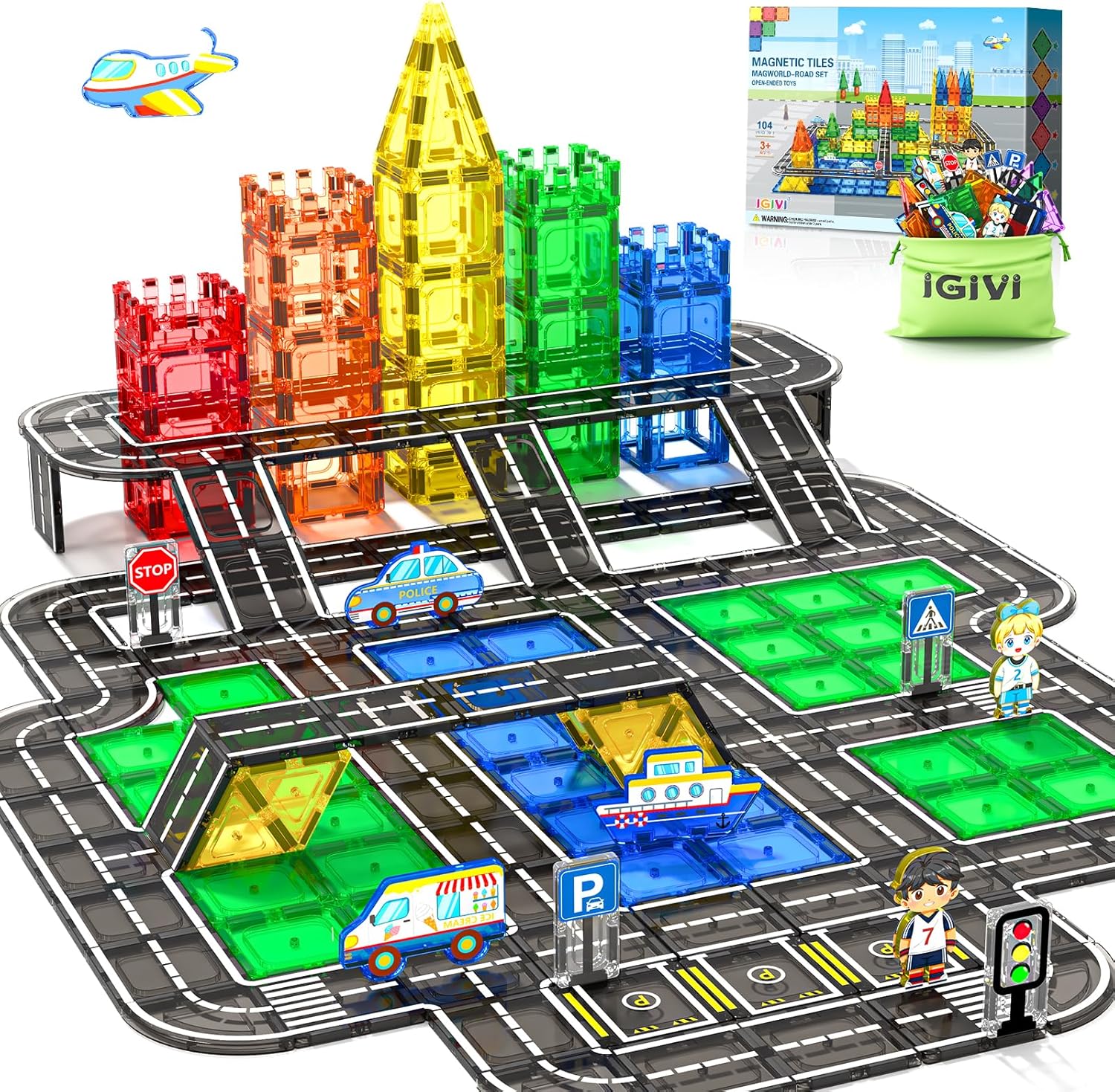
A track set on its own is limited — it needs pillars, and pillars need tiles. The natural companions are a large rainbow supply such as the 30PC collection or a Deluxe set, plus a vehicle set so there is more than one car to race. Families who already own road pieces can run the track down to ground level and continue on the road, which is the build that tends to take over the living room for a weekend.
Questions people ask about SKY TRACK
Does SKY TRACK need other sets to work?
It works out of the box, but it gets dramatically better with a supply of plain tiles to build tall supports. Most families combine it with a large rainbow set.
What age is track building realistic at?
Three-year-olds enjoy rolling cars down a track an adult built. Independent design of a working run usually clicks around five, and gets genuinely inventive from six or seven.
Do the cars need batteries?
Track sets in this style are gravity-driven and do not require batteries. Check the listing if a specific set advertises powered vehicles.
How much floor space does a run need?
Plan for at least a metre square, and more if you build long. A hallway or a low table works better than a rug with uneven pile.
Before you buy
Set contents in this range change between editions, and the same series name can cover several different boxes. Open the listing, read the piece breakdown, and check the age grading printed on the packaging. If you are still deciding between series, the buying guide compares them side by side and the set size guide helps you pick a piece count.
Useful next reads
Related series
If you like SKY TRACK, look at these next
Sets in this family are designed to combine, so most collections grow sideways rather than being replaced.
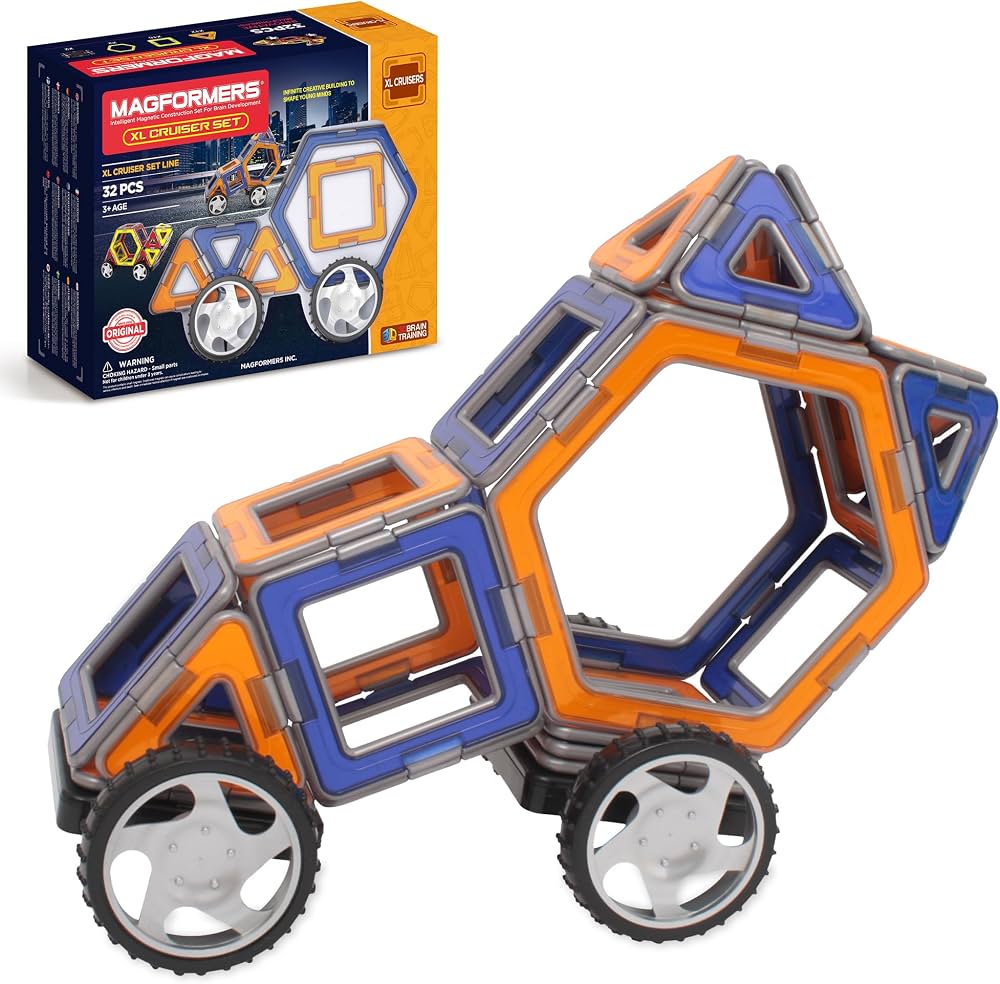
Oversized wheels
XL Cruiser Magnetic Tiles
A wheel base big enough to carry the rest of the toy box.