Classroom & learning
Educational Magnetic Tiles
The shape assortment built around a curriculum rather than a theme.
Educational Magformers sets swap themed accessories for a broader, more deliberate mix of geometric shapes — extra triangles, squares, pentagons, hexagons and often an activity booklet — so the same box supports free play and structured maths work.
Why an educational set is different
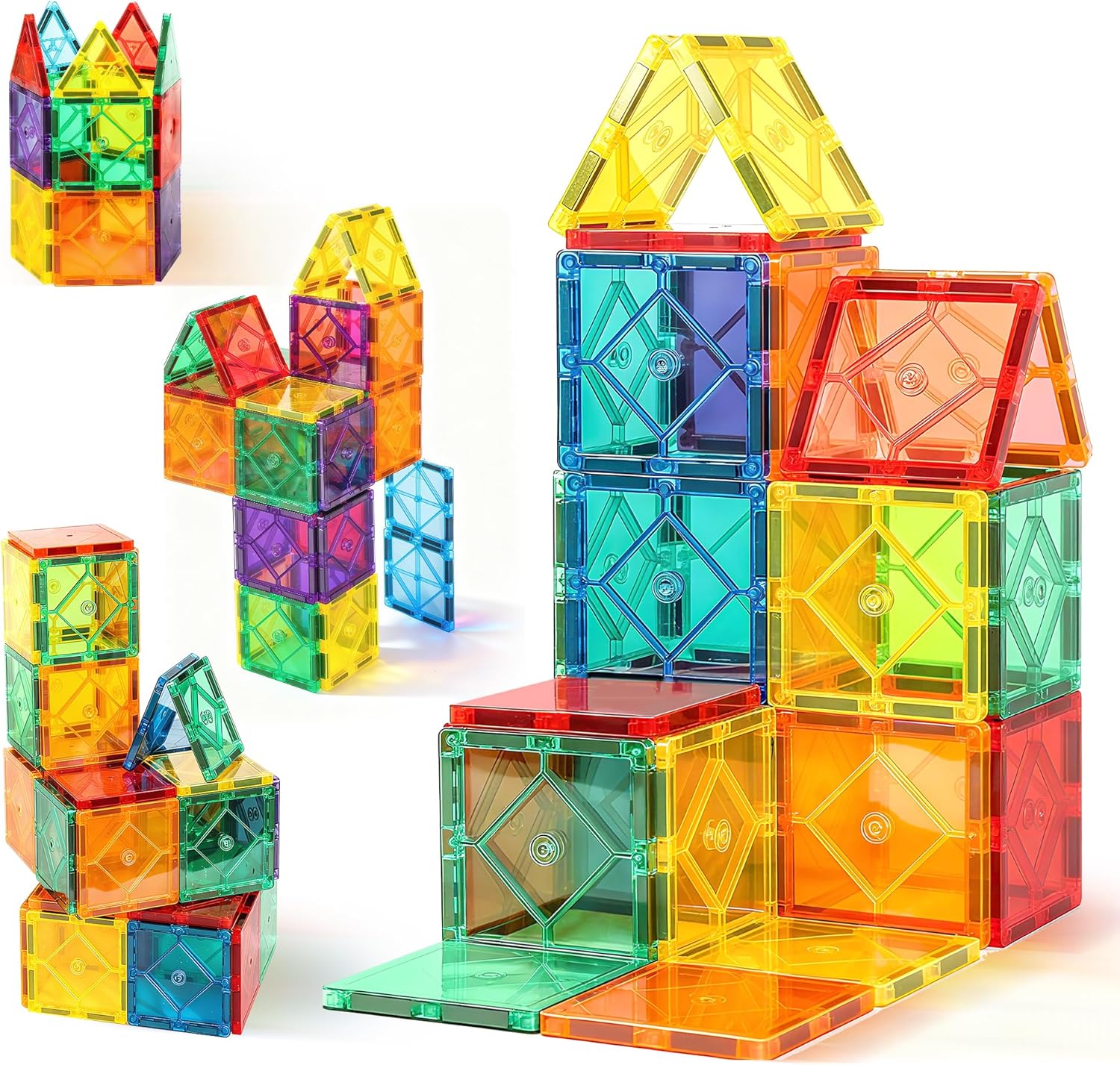
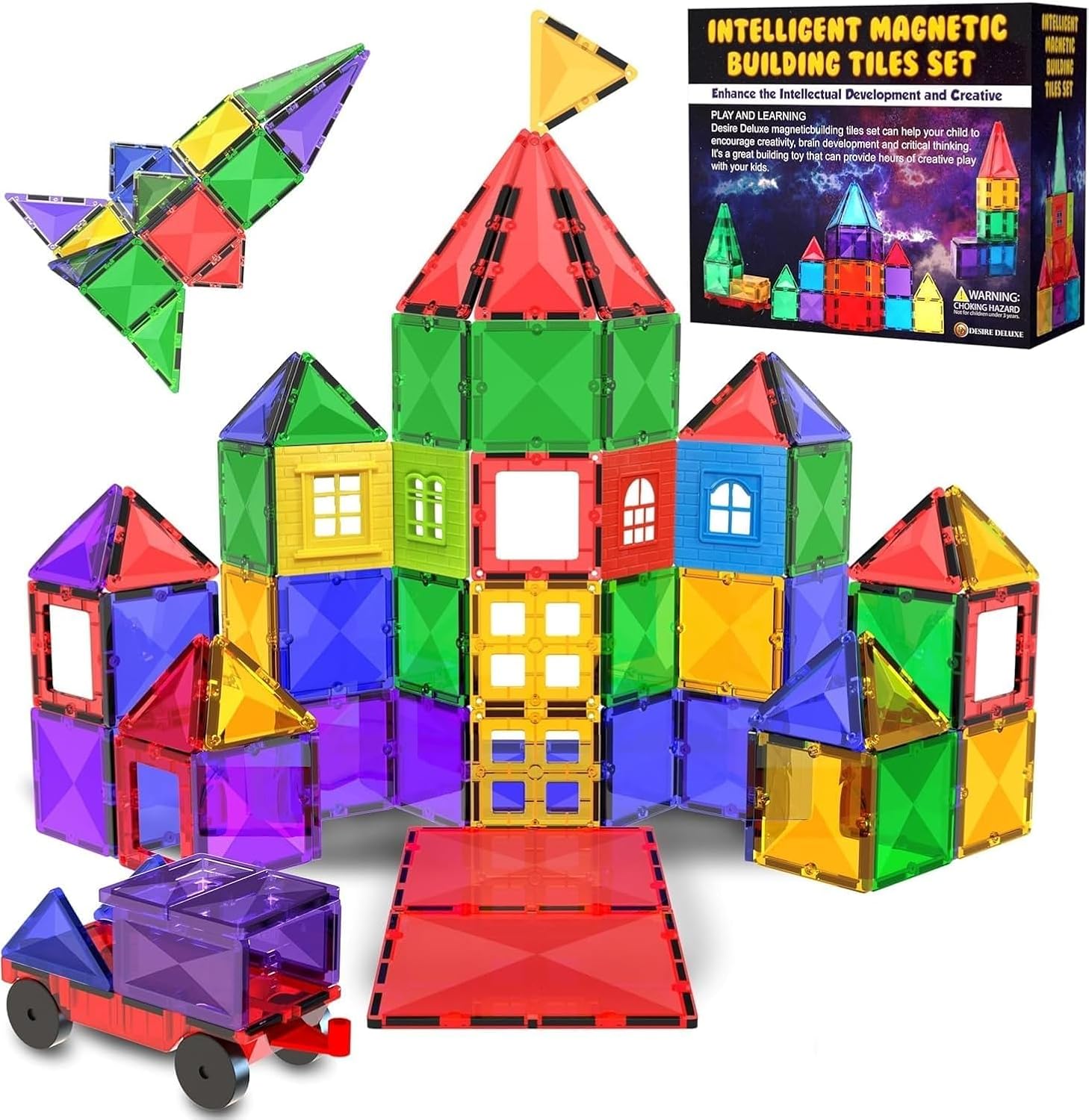
A themed set gives you the pieces needed for one idea: a house, a car, a dinosaur. An educational set gives you the pieces needed for many ideas, weighted towards the shapes that appear in early geometry teaching. That usually means a deeper supply of equilateral triangles and squares, plus the less common pieces — isosceles and right triangles, pentagons, hexagons, sometimes trapezoids — that let a child explore tessellation, symmetry and 3D nets properly.
The practical difference shows up the moment a child tries to build a dodecahedron or a full geodesic dome and discovers a themed set simply does not contain twelve pentagons. Educational assortments are put together to avoid that wall.
Many boxes in this category also include an idea booklet or activity card set that steps through builds in order of difficulty. Those cards are worth keeping — they are the difference between a set that gets used for a fortnight and one that gets used for years.
What children actually learn
The claims made about construction toys are often vague, so here is the concrete version. With an educational shape assortment, a child works on:
- Net-to-solid reasoning. Folding a flat cross of six squares into a cube is a genuine spatial-reasoning task, and it is the same skill later tested in secondary school geometry.
- Face, edge and vertex counting. Physical models make Euler's relationship visible instead of abstract.
- Symmetry and tessellation. Which shapes tile a plane without gaps, and which do not.
- Angle intuition. Six equilateral triangles meet at a point; five do not. Children discover this by trying.
- Structural thinking. Triangles resist deformation, squares rack. A tall square tower wobbles and a triangulated one does not.
- Fractions and sorting. Colour and shape sorting is the earliest form of classification, and it happens naturally at tidy-up time.
We go deeper into the research context in our STEM and learning benefits guide.
Using it in a classroom or homeschool
Set a build constraint, not a build target
"Make something four tiles tall using only triangles" produces more thinking than "make a tower".
Ask for a prediction first
Before folding a net, ask what solid it will become. Wrong predictions are the useful ones.
Keep a shape inventory on the lid
Knowing you own eight pentagons prevents the frustrating hunt mid-build.
Photograph finished builds
A printed build gallery becomes a reference library children return to and improve on.
Pair with a light table for younger groups
Translucent pieces plus backlight holds attention noticeably longer in early-years settings.
Questions people ask about Educational
Is an educational set worth the extra money over a plain rainbow set?
If the child is five or older and already builds confidently, yes — the extra shape variety unlocks builds a basic square-and-triangle set cannot do. For a three-year-old, a plain rainbow set is usually the better value.
Can one educational set serve a whole classroom?
Realistically one set serves two to four children. Most teachers we hear from run a set per small group and rotate, or combine several boxes into one shared bin.
What ages does an educational set suit best?
Five to ten is the sweet spot. Younger children enjoy the pieces but will not use the shape variety; older children move on to more demanding builds like domes and compound solids.
Do the activity cards matter?
More than you would expect. Cards give a child a next step when free play stalls, and they scaffold difficulty so success comes before frustration.
Before you buy
Set contents in this range change between editions, and the same series name can cover several different boxes. Open the listing, read the piece breakdown, and check the age grading printed on the packaging. If you are still deciding between series, the buying guide compares them side by side and the set size guide helps you pick a piece count.
Useful next reads
Related series
If you like Educational, look at these next
Sets in this family are designed to combine, so most collections grow sideways rather than being replaced.
Large collection
Deluxe Magnetic Tiles
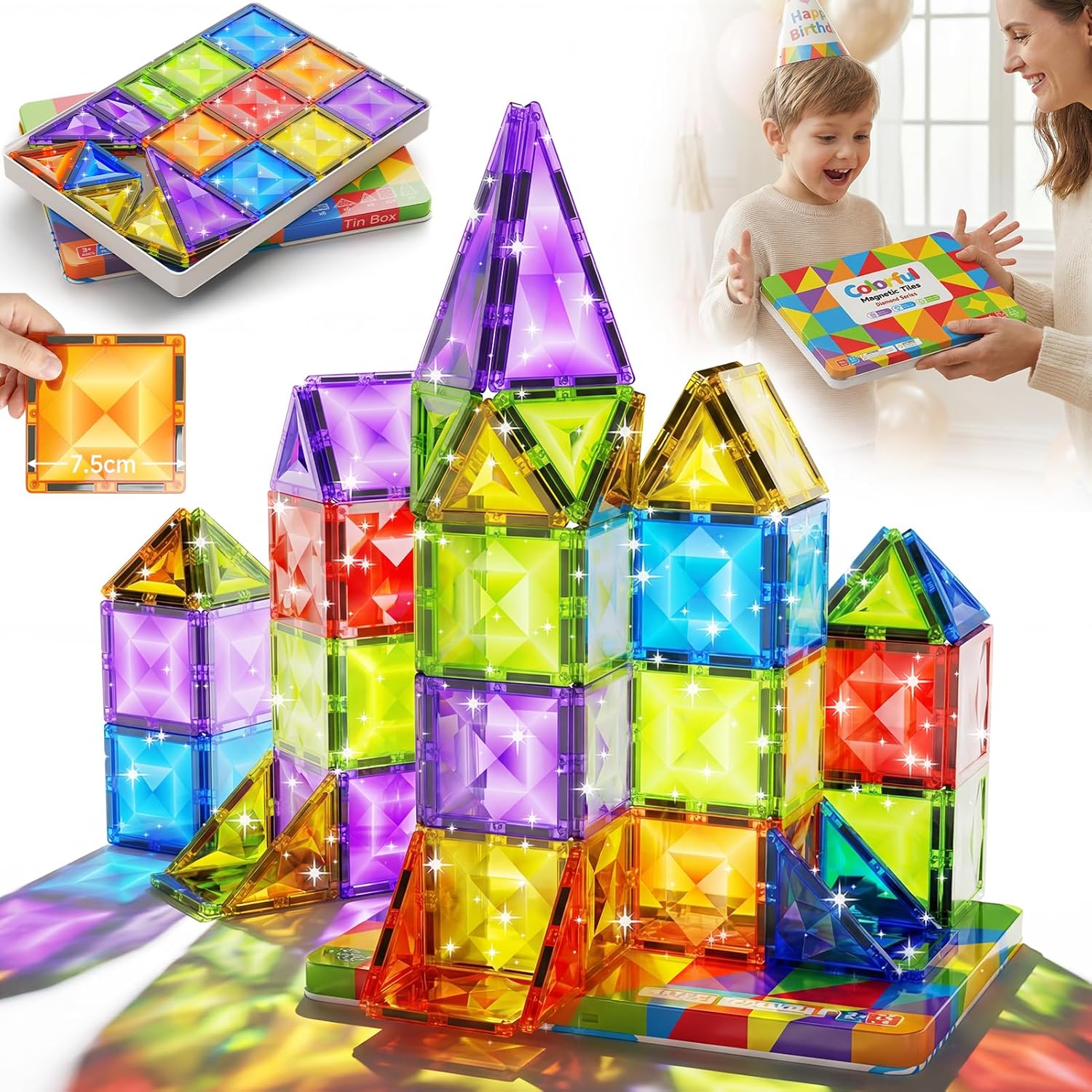
The big box — every shape, enough of each, and room for two builders.