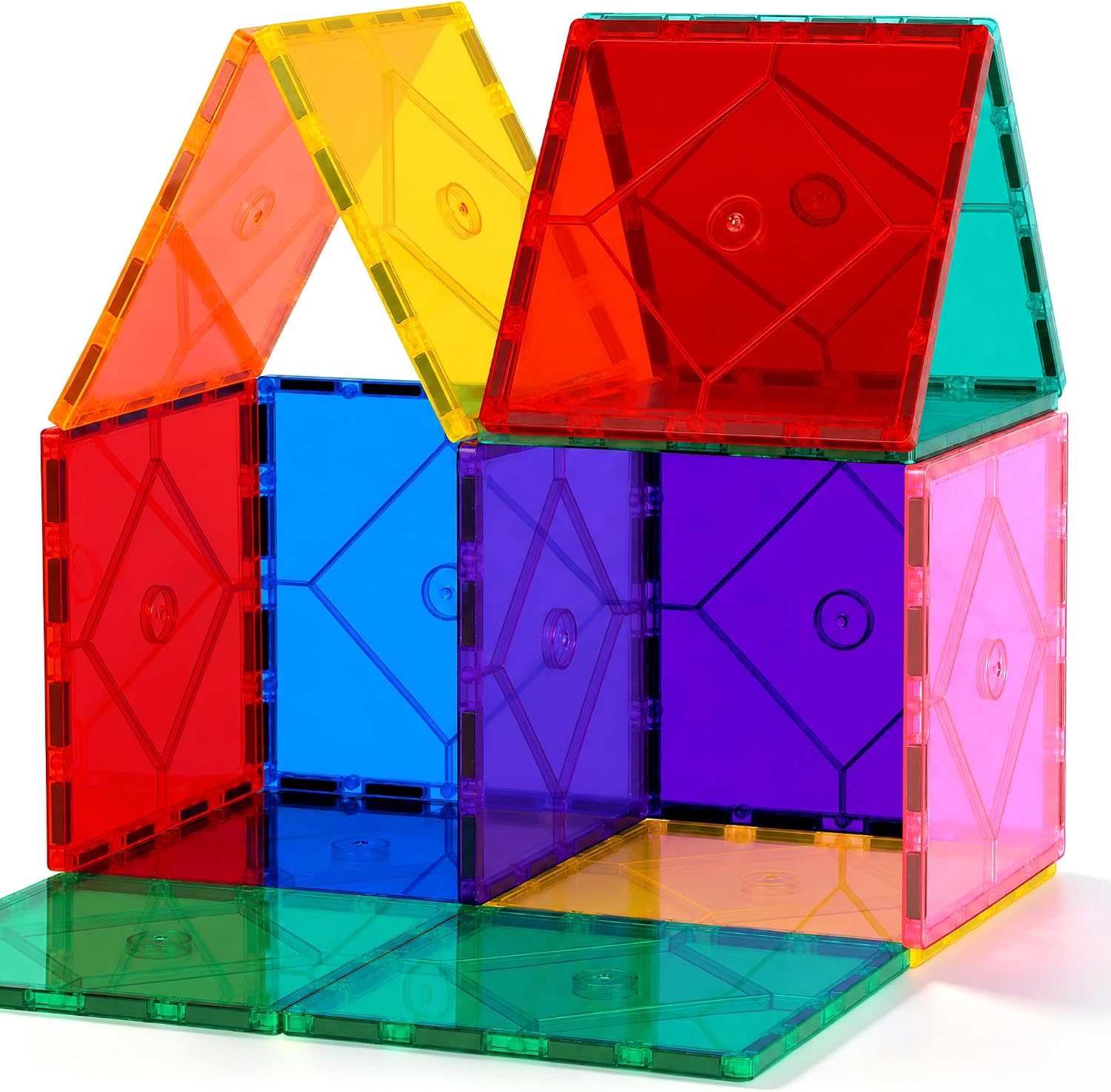
Starter set
14PC Collection Magnetic Tiles
The smallest sensible starting point, and a genuinely good one.
Toddler line
Chunky rods, balls and cones built for hands that are still learning to grip.
STICK-O is the toddler-focused branch of the Magformers family. Instead of flat geometric plates, it uses fat rods, balls, cones and wheels that connect end-to-end with strong internal magnets — a rounded, oversized construction toy aimed at the 18-month to 4-year window.
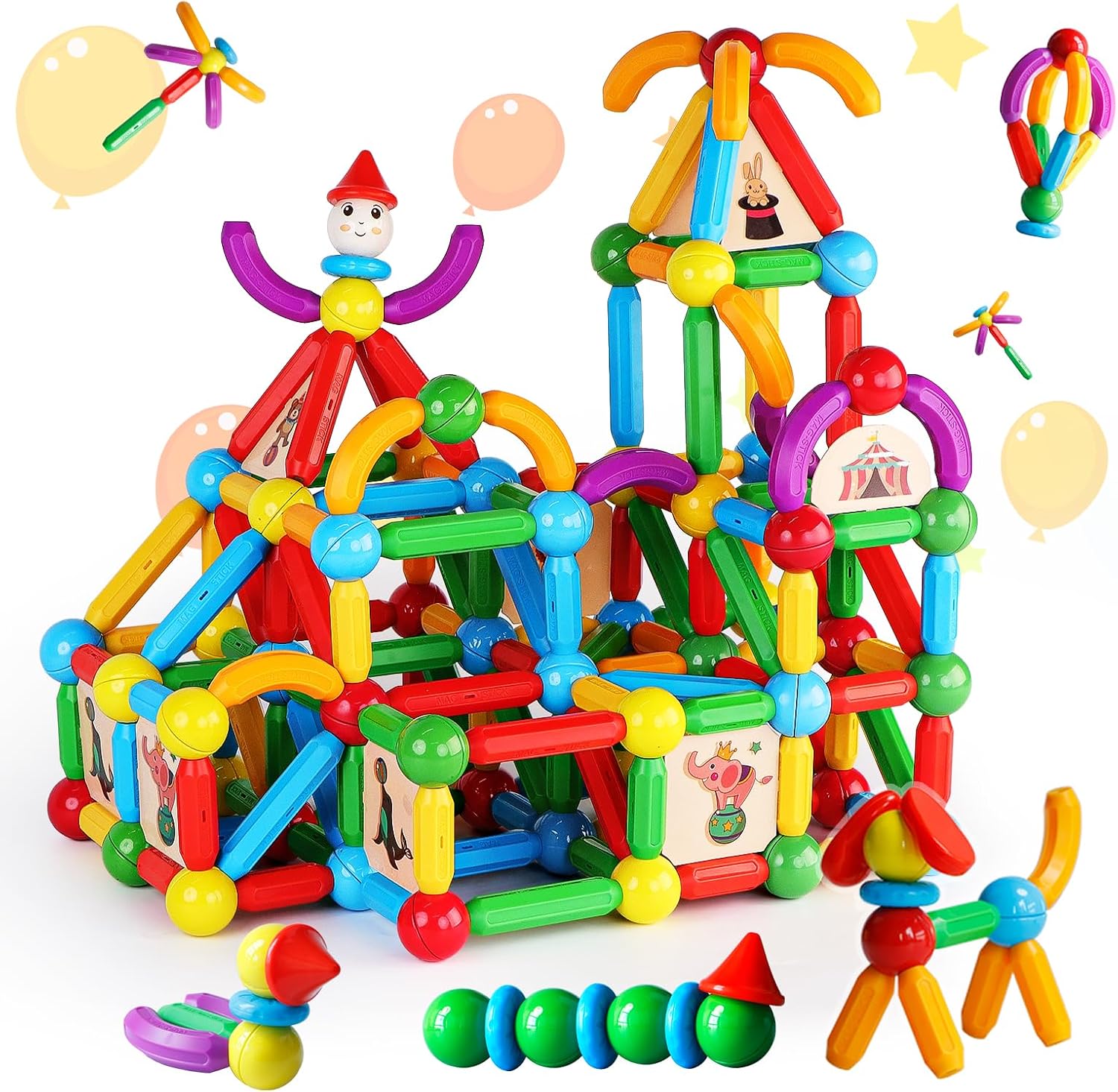
Most people arrive at STICK-O after looking at standard magnetic tiles and realising a two-year-old cannot yet line up a flat square with a flat triangle. STICK-O answers that problem by changing the shape of the building unit entirely. The parts are thick, rounded and easy to hold in a full fist: straight rods, curved rods, spheres, cones, cylinders and simple wheel bases. Each end carries a magnet, so pieces click together in any orientation a toddler happens to try.
That last detail matters more than it sounds. A flat magnetic tile can be presented the wrong way round and repel instead of attract, which reads as failure to a small child. STICK-O parts are far more forgiving — the connection is on a rounded end rather than a long straight edge, so the magnet finds its partner even when the aim is approximate. The result is a toy where a very young builder gets a satisfying clack on almost every attempt, which is exactly the feedback loop that keeps them at the table.
The pieces are moulded in the same saturated primary and secondary colours used across the wider Magformers range, and the surfaces are smooth with no sharp corners. Sets in this line are usually small on purpose — a first set is meant to be dumped out, explored and tidied away in a couple of minutes, not spread across a living room floor.
STICK-O is the right starting point if the child you are buying for is roughly 18 months to 3 years old, still mouths toys occasionally, or has fine motor skills that are ahead of nothing in particular — that is, a completely typical toddler. It also works well as a shared-play toy for a mixed-age household: an older sibling can build a car or a figure while the toddler is happily jamming rods into balls beside them.
It is not the right choice for a four- or five-year-old who already builds confidently. That child will exhaust the possibilities of a small STICK-O set within an afternoon and would get far more out of the 14PC starter or a 30PC rainbow set. Read our age guide if the child is right on the boundary.
Hand the child one rod and one ball. Let them find the click themselves. Tipping out the whole box first often overwhelms a toddler rather than inspiring them.
"Red ball, blue stick" turns ten minutes of building into vocabulary practice without it feeling like a lesson.
Toddlers love collapse. Deliberate demolition teaches balance faster than careful instruction does.
The moment a child realises their creation can roll, the toy gets a second life as a vehicle workshop.
Deep boxes hide parts. A shallow tray lets a toddler see everything and self-serve — see our storage guide.
Set contents in this range change between editions, and the same series name can cover several different boxes. Open the listing, read the piece breakdown, and check the age grading printed on the packaging. If you are still deciding between series, the buying guide compares them side by side and the set size guide helps you pick a piece count.
Related series
Sets in this family are designed to combine, so most collections grow sideways rather than being replaced.
The smallest sensible starting point, and a genuinely good one.
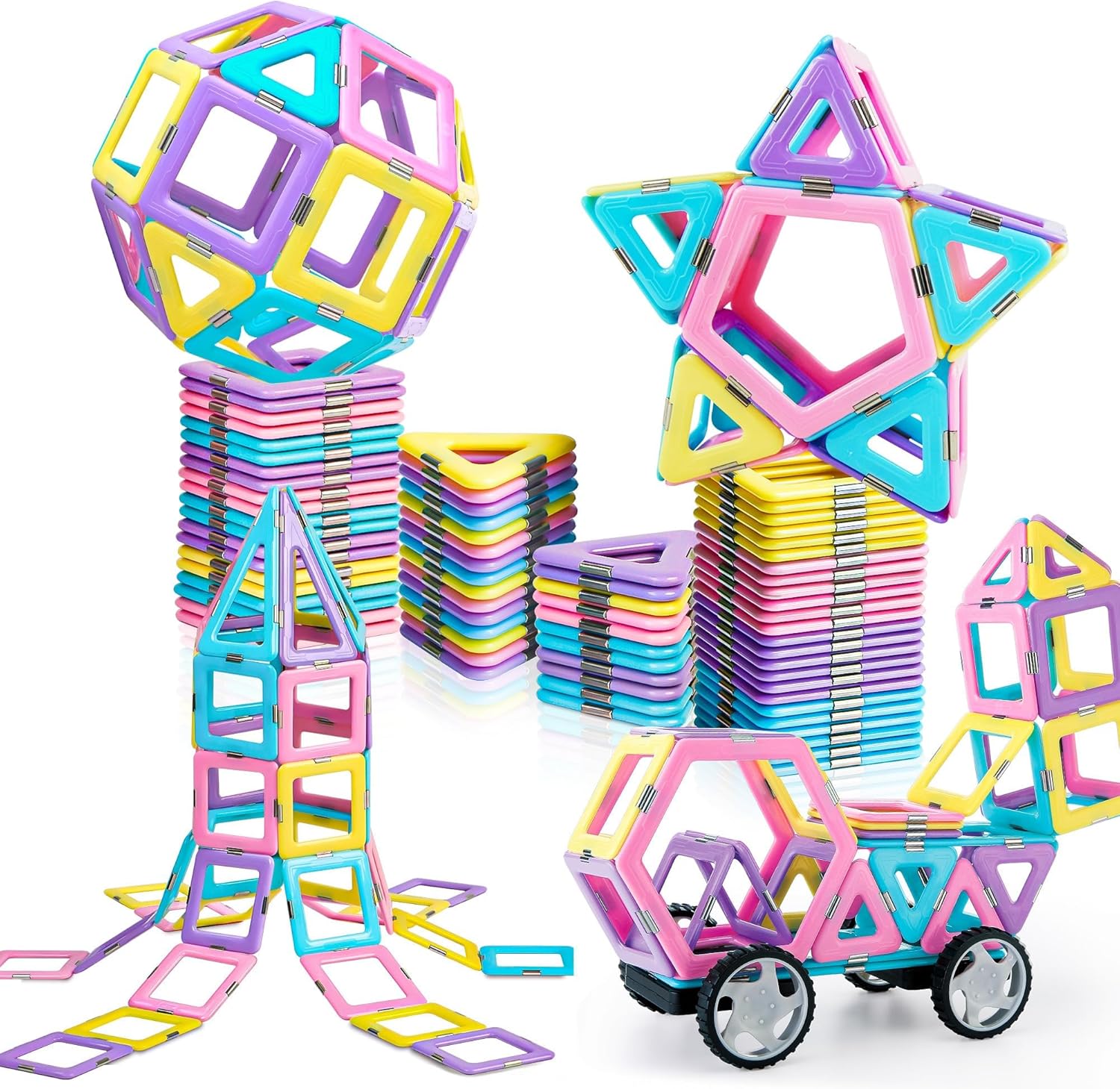
A small box with one very good trick: it folds flat, then drives away.
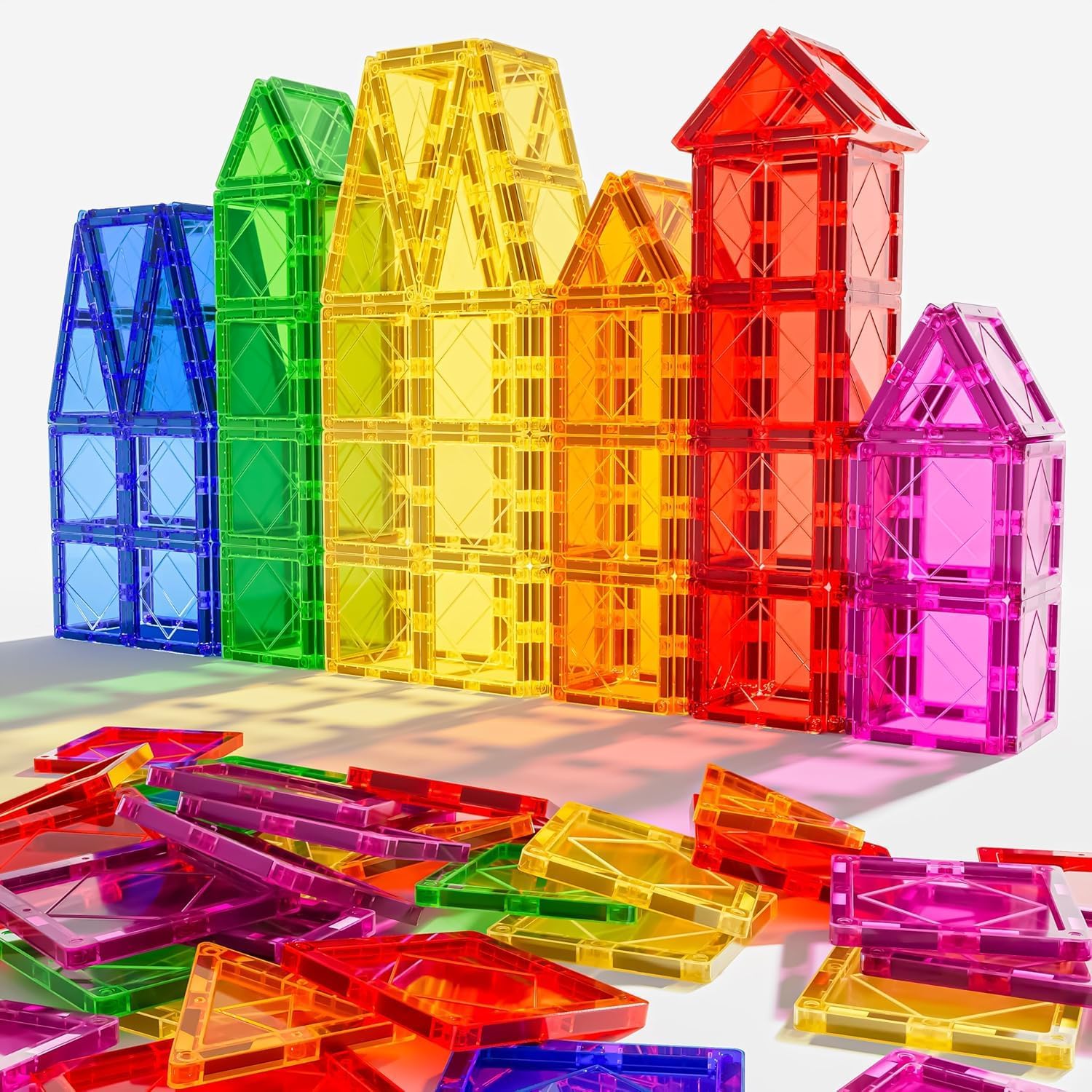
Solid-panel tiles with the same click, for builders who want walls rather than frames.