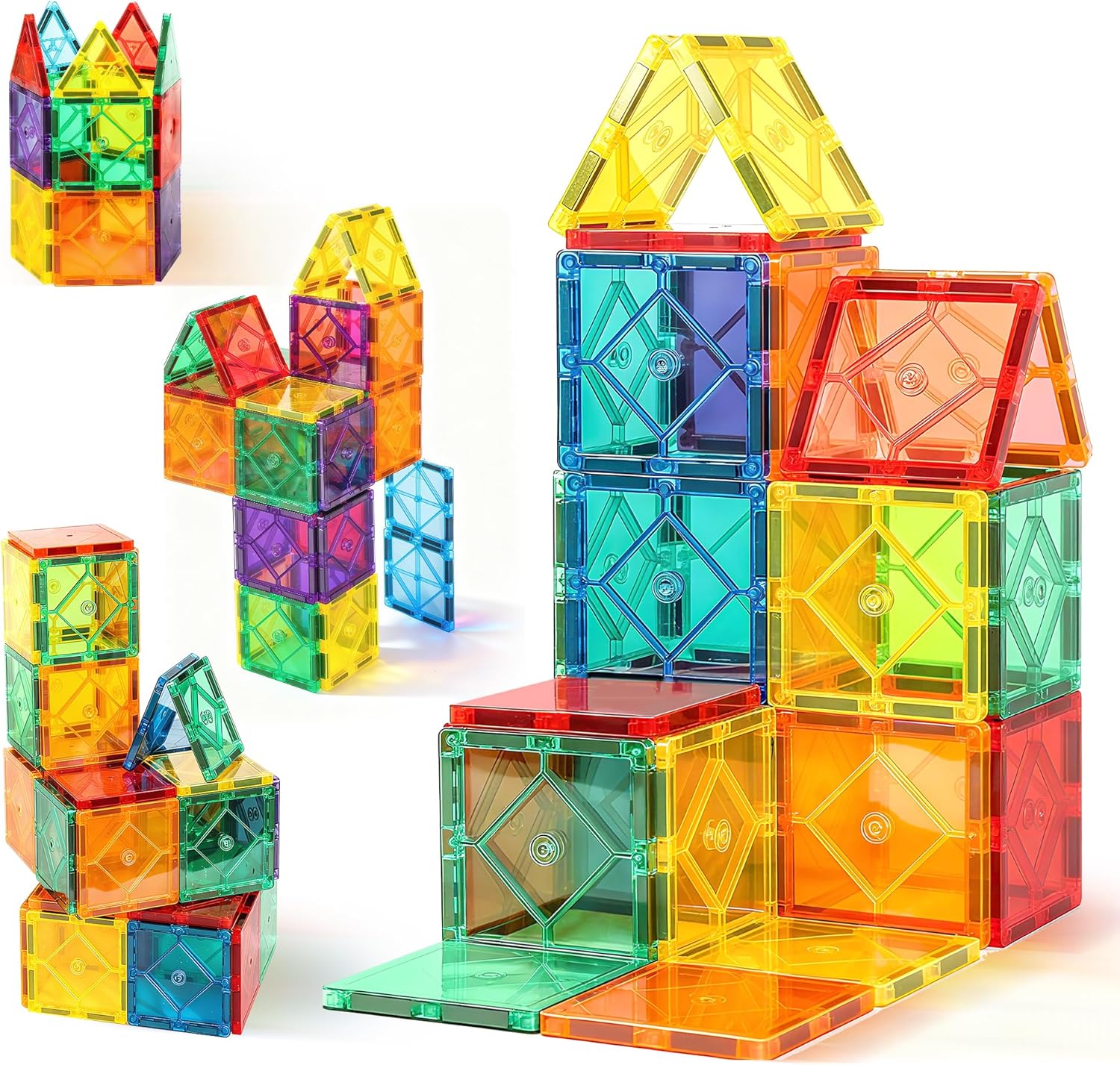
Starter set
14PC Collection Magnetic Tiles
The smallest sensible starting point, and a genuinely good one.
A 14-piece collection is the classic entry set: a handful of squares and triangles, enough to fold a cube, build a small house and discover what the toy actually does before committing to a bigger box.
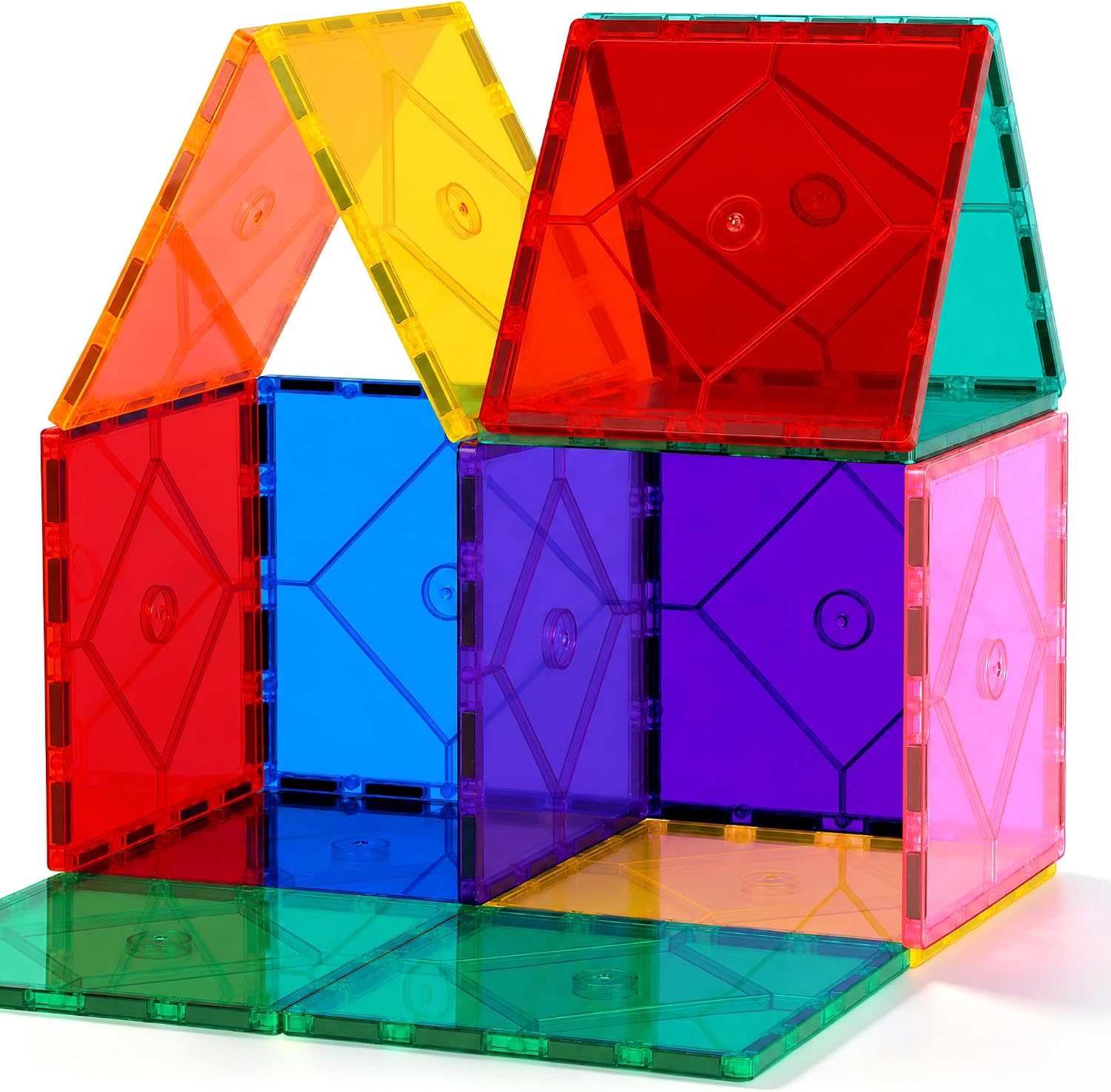
What 14 pieces can really build
It is fair to be sceptical of a 14-piece set. It sounds like a token. In practice it covers a surprising amount of ground, because the fundamental discovery — that six squares fold into a cube — needs exactly six squares.
With a typical mix of squares and equilateral triangles you can build a cube, a simple house with a pitched roof, a flat mosaic, a short tower, a pyramid and a basic rocket shape. That is enough for a child to understand the system. What it will not do is support two children building at once, or a tall tower, or anything with a roof that needs more than a few triangles.
The honest way to think about a 14-piece box is as a test purchase or a small gift — a birthday present for a classmate, a travel set, or a way to find out whether a particular three-year-old is interested before spending on a 30-piece or Deluxe box.
Where a small set wins
Good reasons to buy small
- Travel — it fits in a bag and survives a train journey.
- Testing interest before a large investment.
- Party gifts and stocking fillers at a sensible price.
- A younger sibling's own set, so nobody has to share.
- Grandparents' house, where a small set is enough for an afternoon.
When to skip it
- If two or more children will build together — 14 pieces causes arguments.
- If the child is five or older and already builds well.
- If your goal is tall towers or elaborate houses.
- If you know they will love it — the cost per piece is better in larger sets.
First-week plan for a new set
Day one: the cube
Lay six squares in a cross and fold it up. Nothing else needs to happen on day one.
Day two: the house
Cube plus two triangles as a roof. The child now owns a repeatable build.
Day three: flat patterns
Mosaics on the floor use every piece and teach tessellation quietly.
Day four: on the fridge
Tiles stick to the fridge door. Vertical building is a different problem and refreshes interest.
Day five: knock it down
Build the tallest possible tower and film the collapse. Then rebuild it stronger.
Questions people ask about 14PC
Is 14 pieces enough for a 3-year-old?
For one child, for short sessions, yes. If two children will play together you will want at least 30 pieces to avoid the piece-shortage arguments.
What can you actually build with 14 tiles?
A cube, a small house, a pyramid, a short tower and flat mosaics. Anything larger runs out of squares quickly.
Should I just buy a bigger set instead?
If you already know the child loves construction toys, yes — cost per piece is better and the play lasts longer. If you are testing the water, a small set is a reasonable gamble.
Can I add to it later?
Yes. Same-family sets combine freely, so a small starter and a larger box later work as one collection. See the set size guide.
Before you buy
Set contents in this range change between editions, and the same series name can cover several different boxes. Open the listing, read the piece breakdown, and check the age grading printed on the packaging. If you are still deciding between series, the buying guide compares them side by side and the set size guide helps you pick a piece count.
Useful next reads
Related series
If you like 14PC, look at these next
Sets in this family are designed to combine, so most collections grow sideways rather than being replaced.
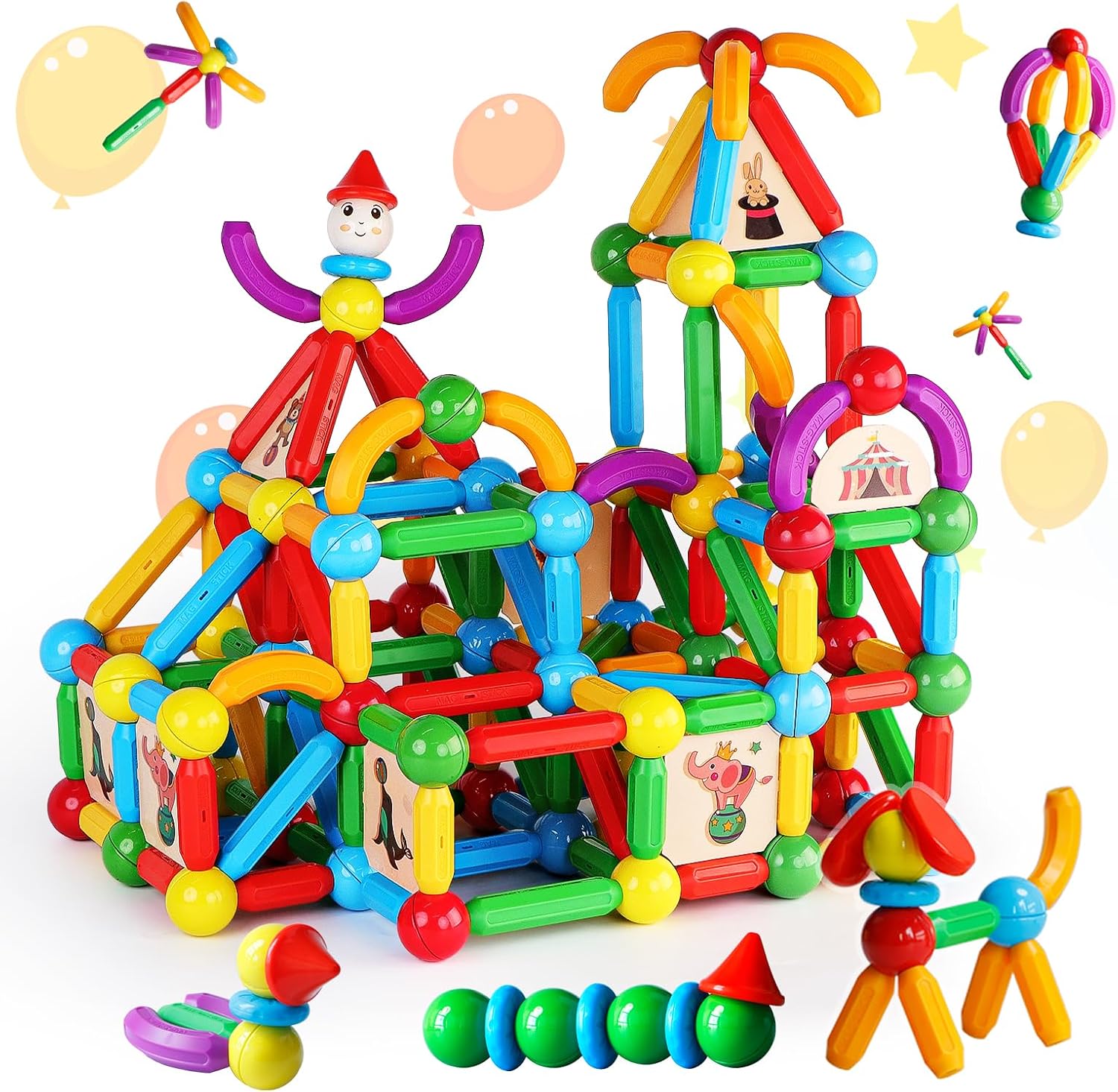
Toddler line
STICK-O Magnetic Tiles
Chunky rods, balls and cones built for hands that are still learning to grip.
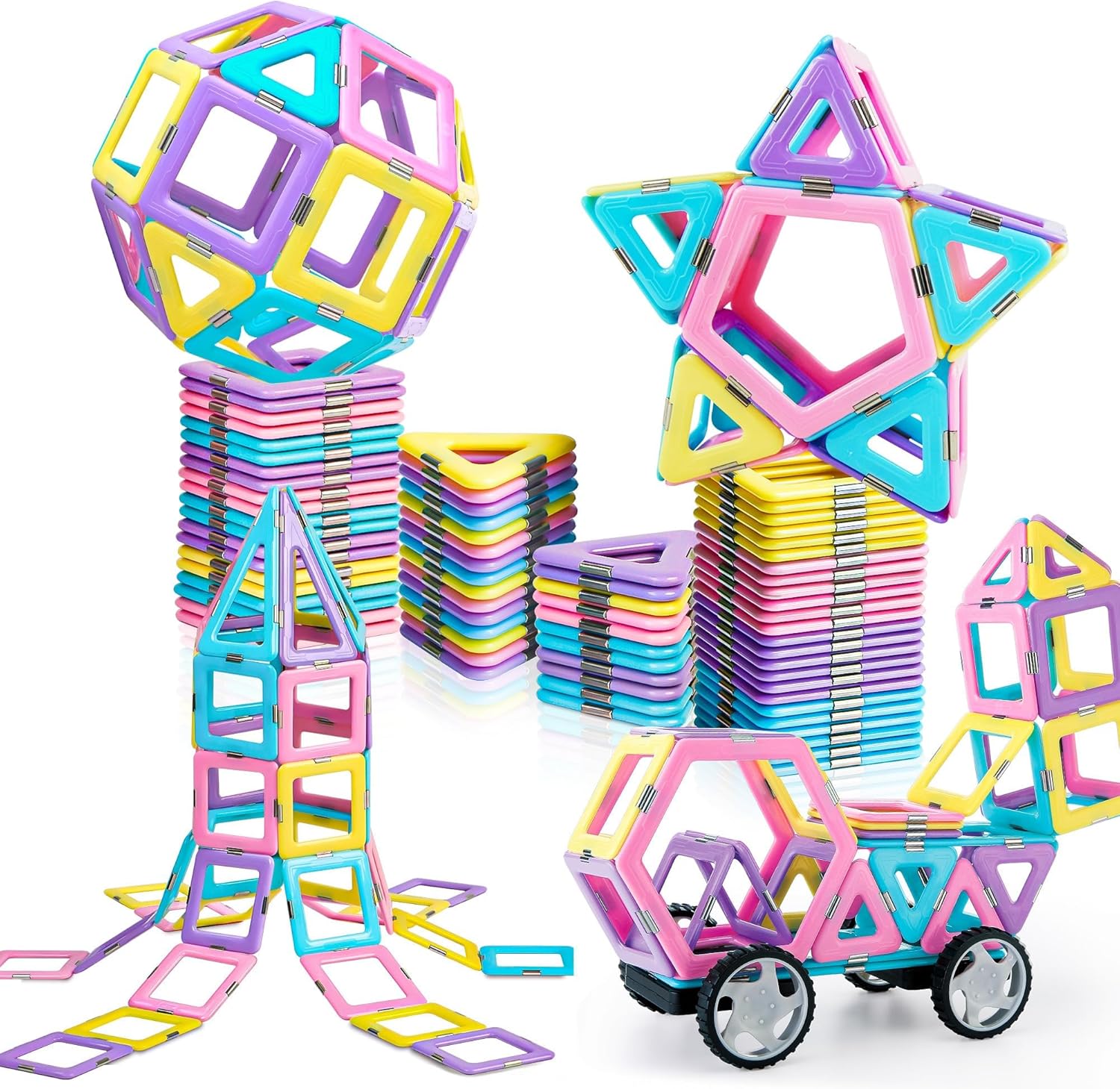
Small & clever
Wow Series Magnetic Tiles
A small box with one very good trick: it folds flat, then drives away.