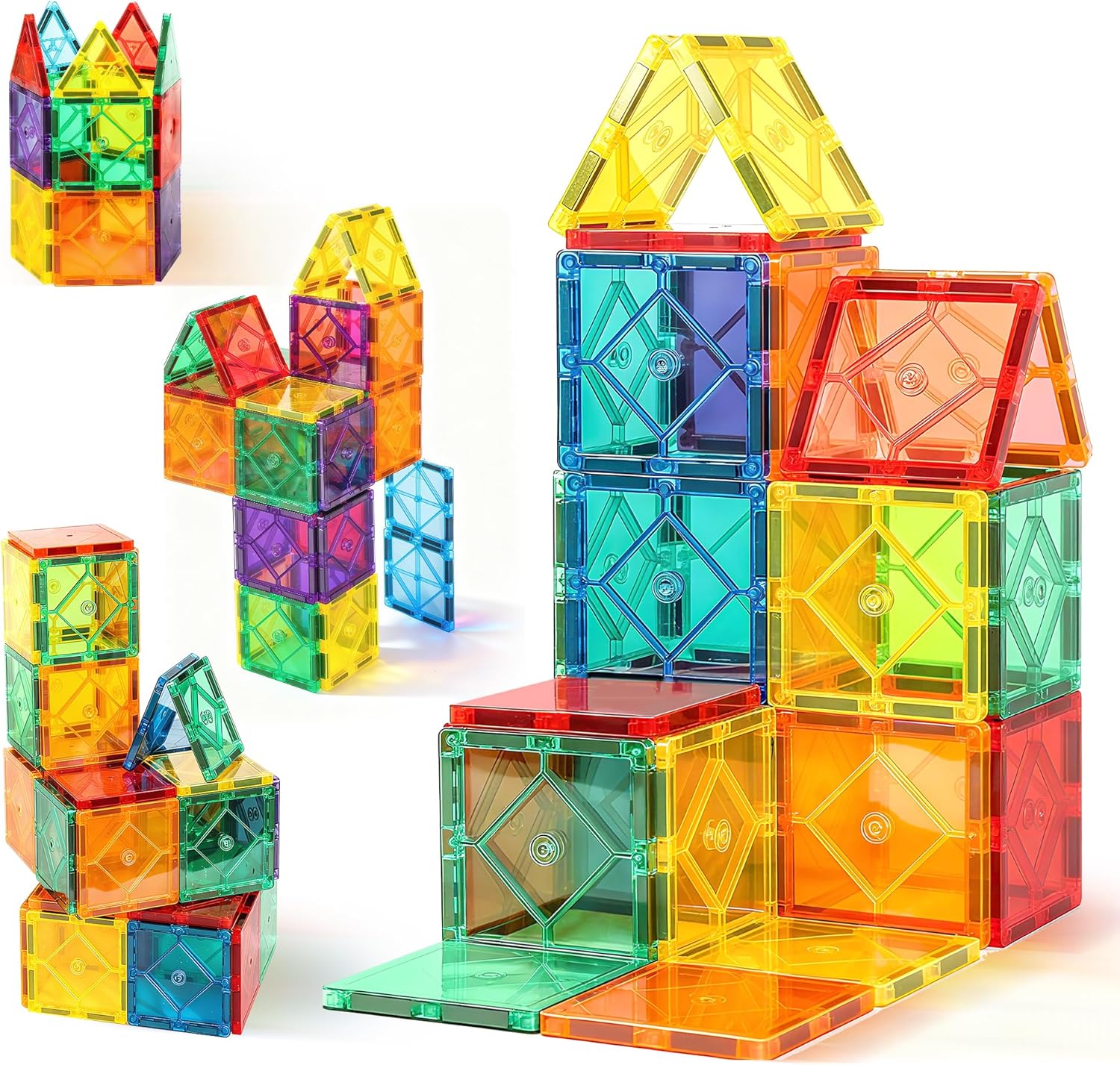
Solid cubes
Cube Series Magnetic Tiles
Solid blocks that stack like bricks and snap like magnets.
Cube Series works in three dimensions from the start: complete magnetic cubes that stack, align and hold, giving a chunkier, more brick-like build than folding flat tiles into shapes.
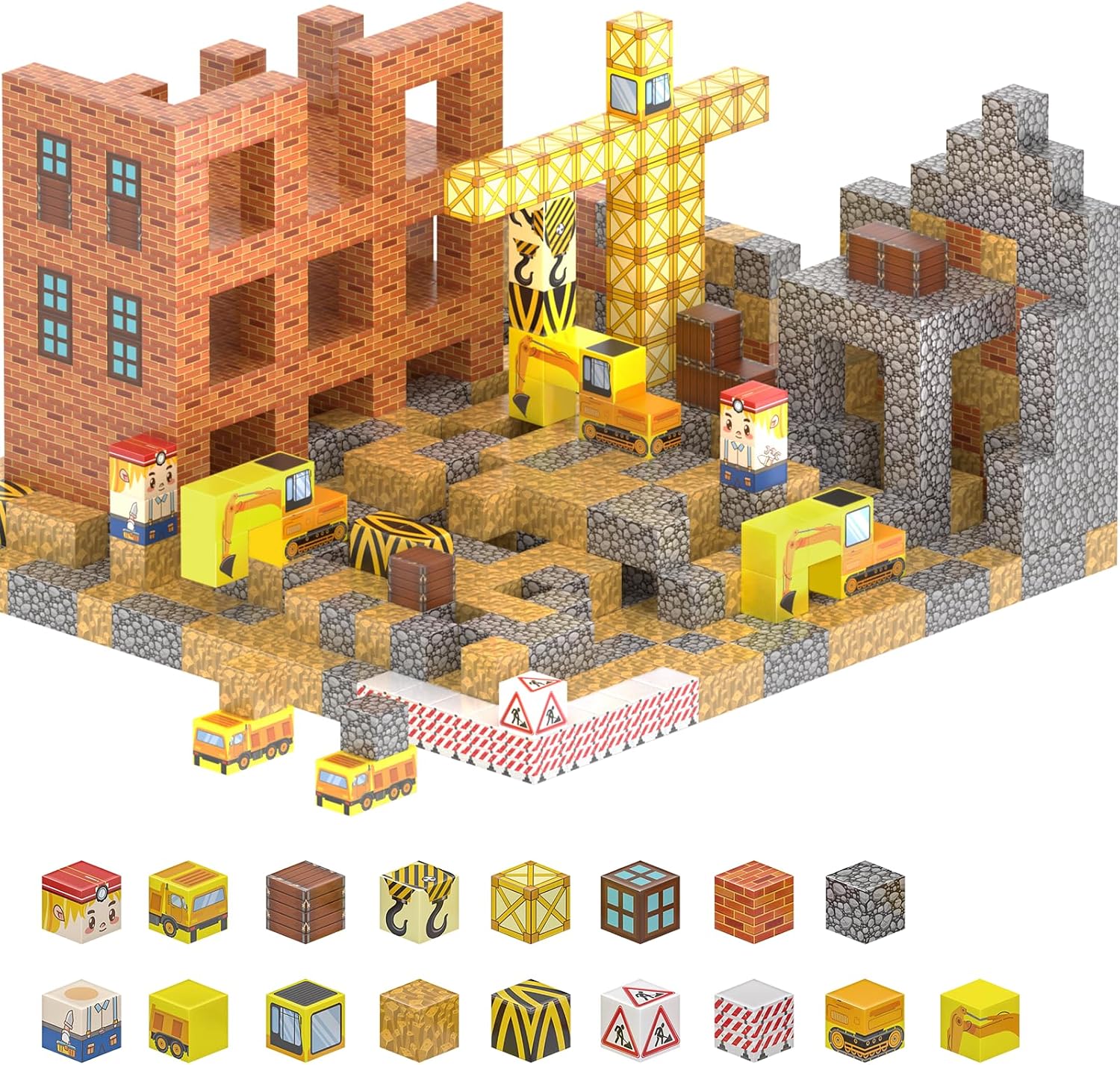
A different building logic
Flat tiles ask a child to think in nets: take a two-dimensional arrangement and fold it into a solid. Cubes skip that step. Each piece is already a solid, so building is additive and immediate — stack, align, done. For some children that is a much better fit, particularly those who found the folding step frustrating or who came to magnetic building from wooden blocks.
The stacking behaviour is also more stable. A tower of magnetic cubes holds its shape when nudged in a way a tall stack of folded tiles does not, because each junction has magnets on a full face rather than an edge. Children who build tall and then knock things down deliberately get more satisfying results here.
Cube sets also introduce a genuinely useful maths idea: volume. Counting the cubes in a 2×2×2 arrangement and then predicting 3×3×3 is a natural, physical route into cubic numbers, and it lands years before the topic appears in a textbook.
Cube-specific activities
- Predict the volume. Build a 2×2×2, count it, then ask how many for 3×3×3 before building it.
- Mirror builds. One person builds, the other copies it exactly from the other side of a barrier.
- Colour patterns. Alternate colours in a checkerboard through a full three-dimensional block.
- Bridge test. Span a gap and add cubes until it fails, then rebuild with a support.
- Combine with flat tiles. Use cubes as the load-bearing base and flat tiles for walls and roofs.
Who it suits
Cube sets suit three- to seven-year-olds, and are a particularly good pick for a child who already loves wooden blocks and wants the same play with magnets holding it together. They also work well alongside a flat-tile collection rather than instead of one — the two systems complement each other, cubes providing structure and tiles providing surfaces. If you own neither, start with a 30PC rainbow set and add cubes later.
Questions people ask about Cube Series
Do cubes work with flat magnetic tiles?
They attract and can be combined in the same build, though the sizing may not match perfectly across every set. Many families use cubes as the base and tiles above.
Are cubes better than tiles for young children?
Not better, but often easier. There is no folding step, so a very young child gets a satisfying result faster.
Can you build hollow structures with cubes?
Yes, though you use pieces quickly. Cubes are solid modules, so a wall costs more pieces than the same wall built from flat tiles.
Are the magnets strong enough to hold a tall tower?
Face-to-face magnet contact makes cube stacks noticeably stable. Height is limited more by alignment drift than magnet strength.
Before you buy
Set contents in this range change between editions, and the same series name can cover several different boxes. Open the listing, read the piece breakdown, and check the age grading printed on the packaging. If you are still deciding between series, the buying guide compares them side by side and the set size guide helps you pick a piece count.
Useful next reads
Related series
If you like Cube Series, look at these next
Sets in this family are designed to combine, so most collections grow sideways rather than being replaced.
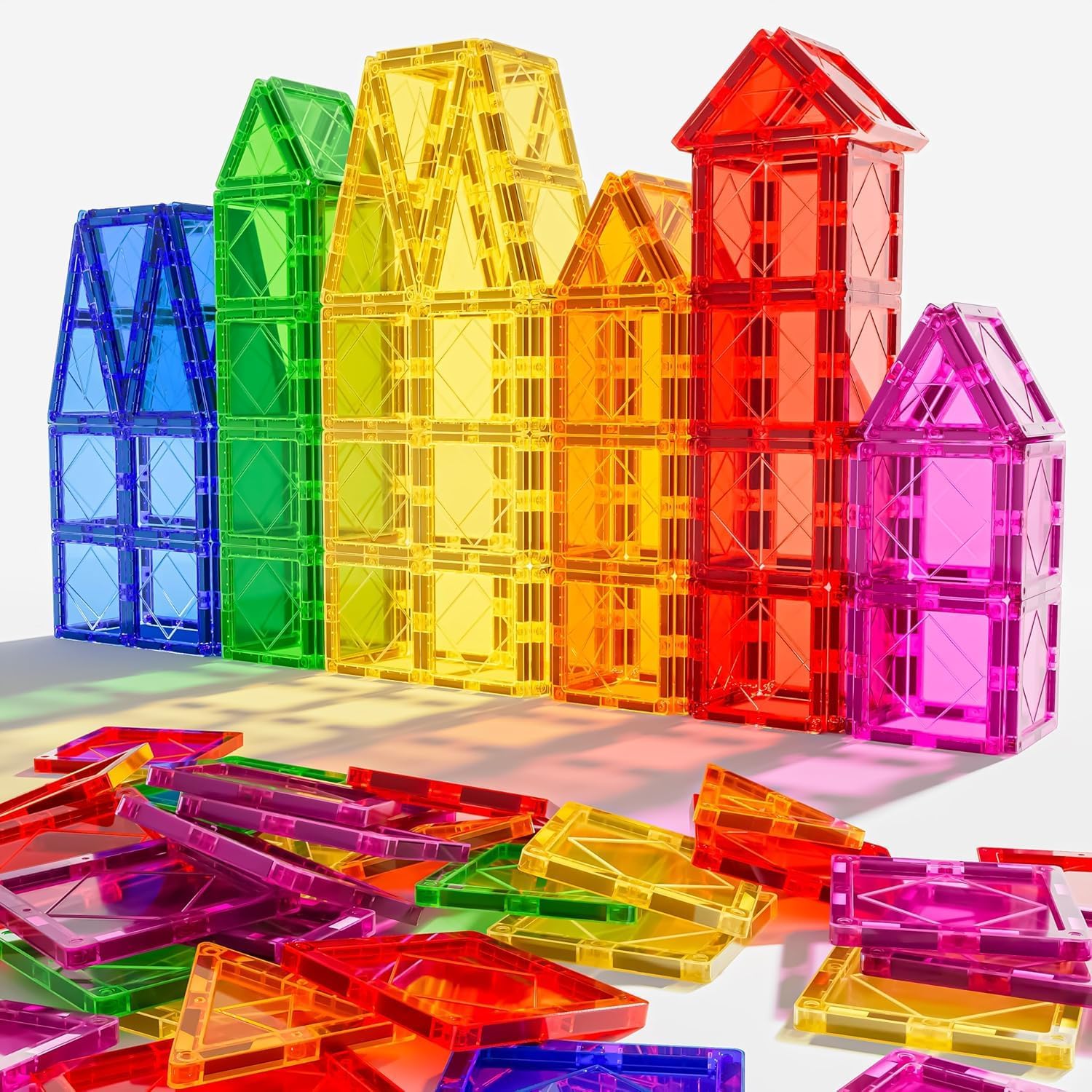
Solid-face tiles
TILEBLOX Magnetic Tiles
Solid-panel tiles with the same click, for builders who want walls rather than frames.
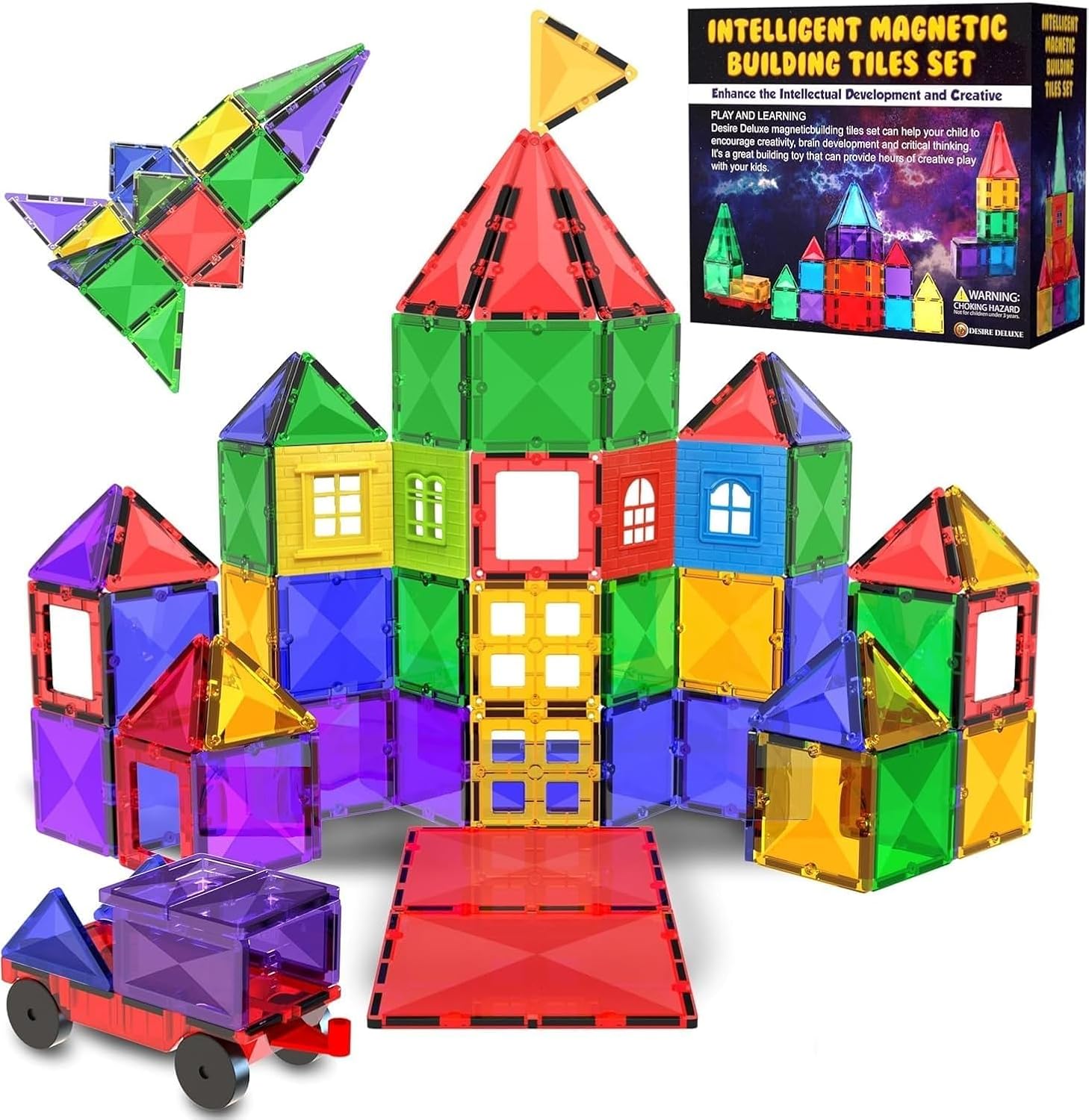
Classroom & learning
Educational Magnetic Tiles
The shape assortment built around a curriculum rather than a theme.