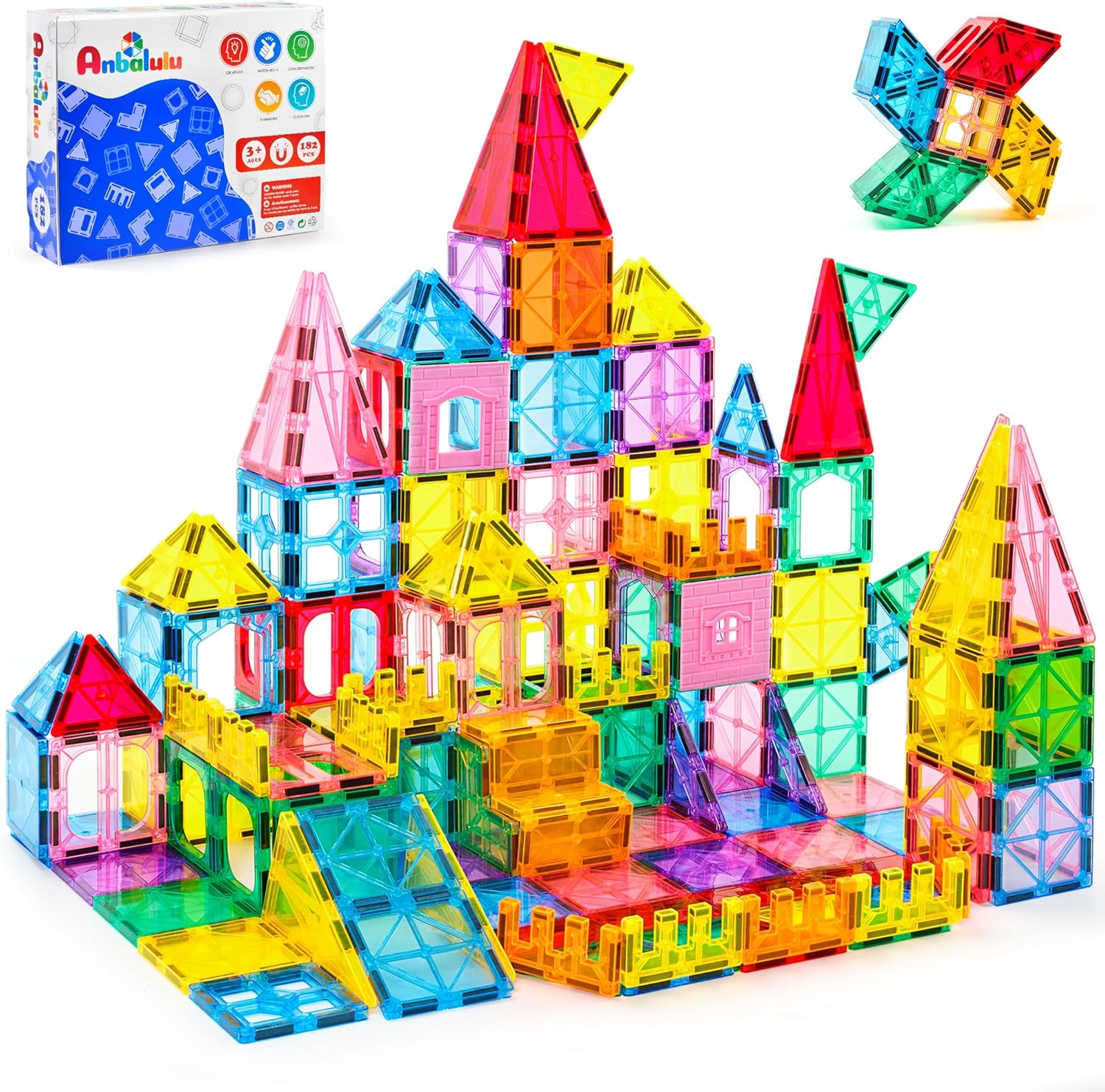
Small-world play
House Magnetic Tiles
Doors that open, windows that frame a face, roofs that actually sit right.
Themed buildings
A bakery, a station, a shop — buildings with a job and a story.
Town Series sets give each build an identity: printed or moulded panels turn generic walls into shops, stations, cafés and service buildings, which is what pulls narrative play out of pure construction.
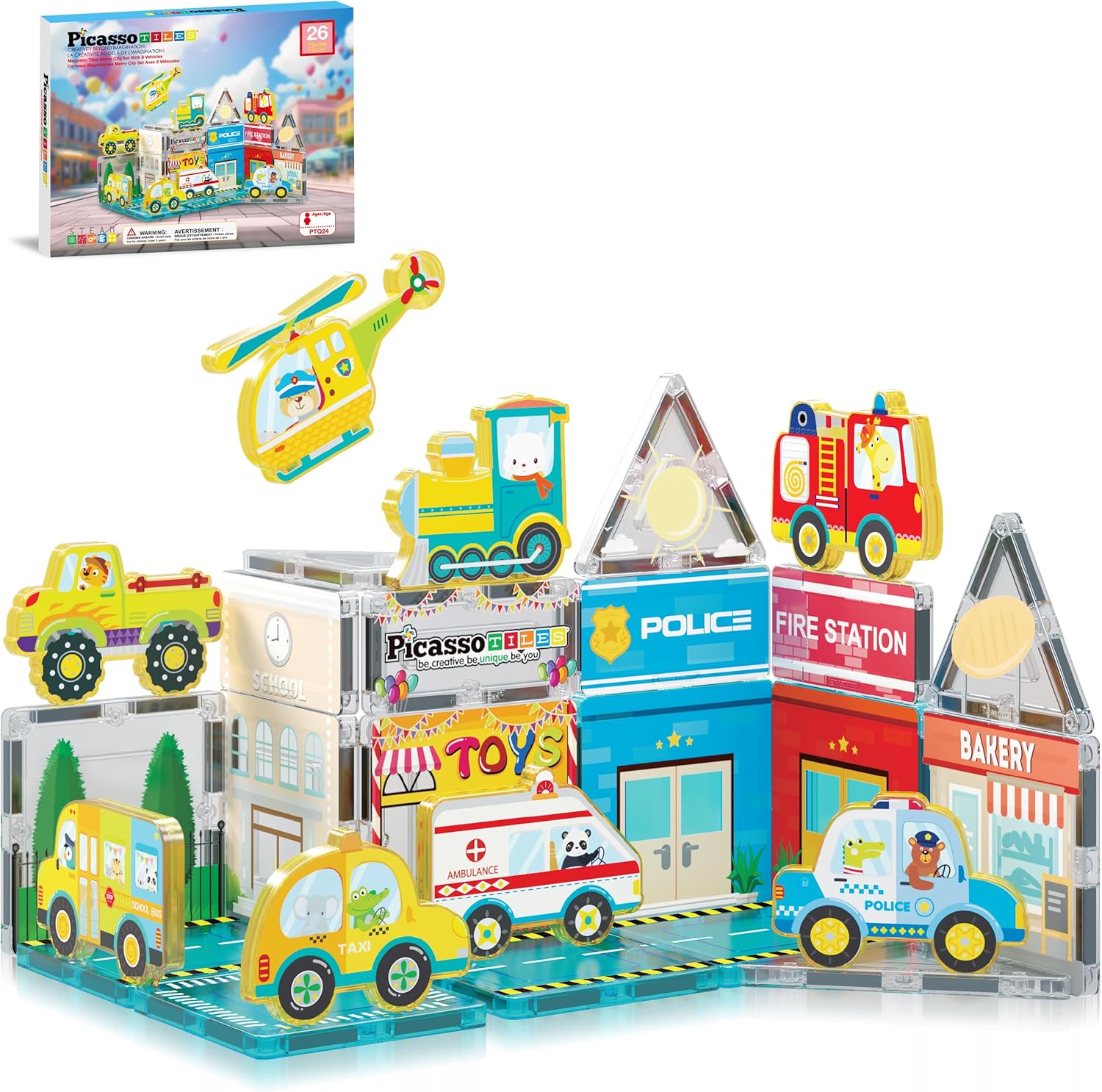
The jump from "a house" to "a town" is bigger than it sounds. Once a child has two buildings with different purposes, they need a relationship between them — a road, a delivery, a customer walking from one to the other. That is the point where construction play becomes narrative play, and narrative play is what keeps a set out of the cupboard.
Town Series boxes lean into this with themed panels and accessories that identify each structure. The specific themes vary by set and edition, so treat the listing photos as the source of truth rather than any general description. What is consistent is the intent: the pieces exist to make a build recognisable as a particular kind of place.
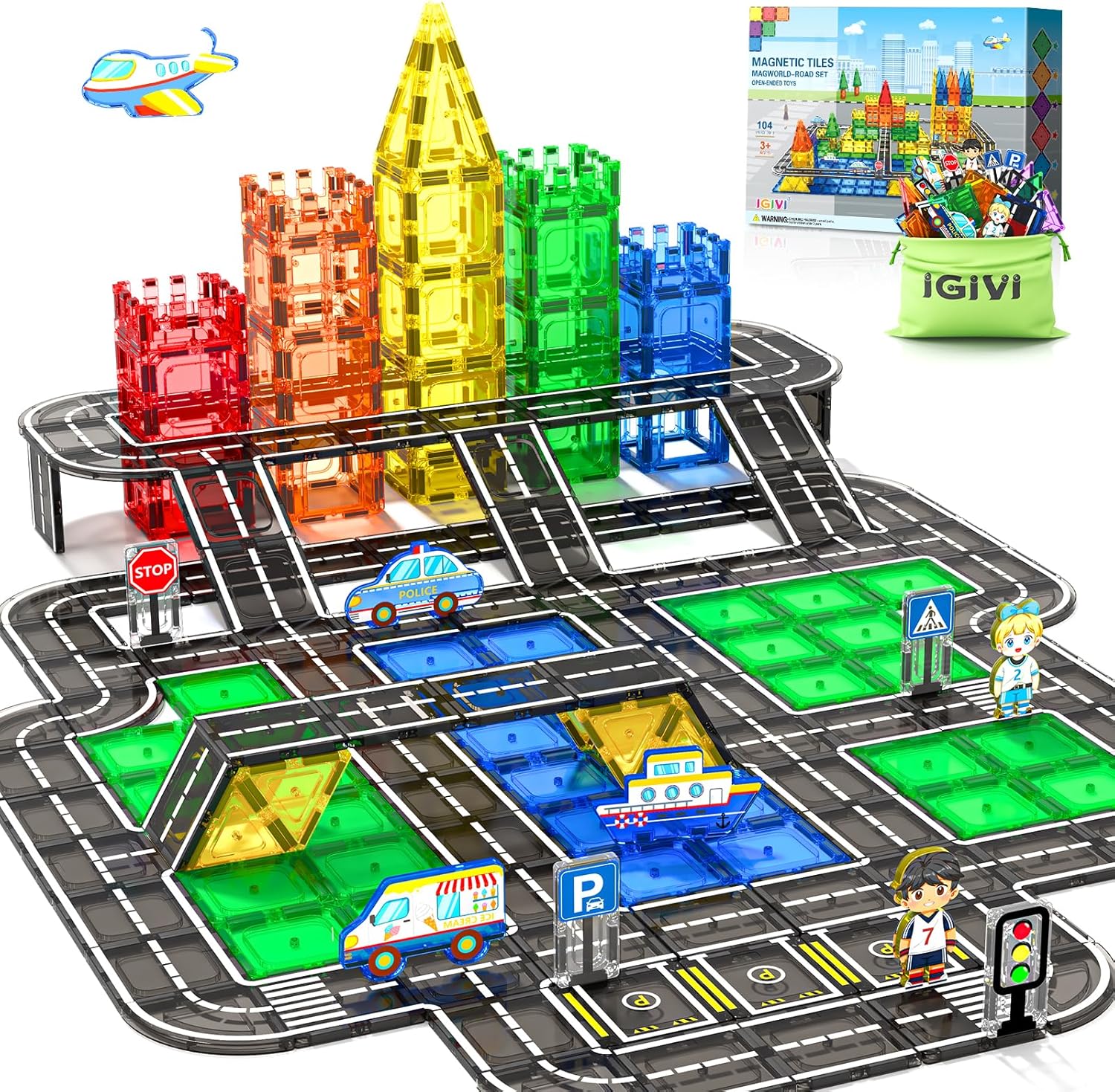
These sets combine naturally with road pieces and vehicles. A town without traffic is a diorama; a town with a delivery van is a game.
Towns die when they have to be tidied every night. A low table or a corner of a rug that can stay put buys days of extra play.
Roads define the plots. Buildings placed first end up in the way.
Ask the child what happens inside. The answer becomes the day's story.
Any small figures already in the house will do. Scale does not need to be correct.
A delivery that has not arrived, a bridge that is out. Problems drive rebuilding, and rebuilding is where the learning happens.
Town sets work best for four- to eight-year-olds, particularly children who already enjoy pretend play. For a child who prefers pure structure and geometry, an educational shape assortment will hold attention better. For a mixed group of siblings, a town is one of the few builds where children of different ages can genuinely collaborate — the older one builds, the younger one populates.
Set contents in this range change between editions, and the same series name can cover several different boxes. Open the listing, read the piece breakdown, and check the age grading printed on the packaging. If you are still deciding between series, the buying guide compares them side by side and the set size guide helps you pick a piece count.
Related series
Sets in this family are designed to combine, so most collections grow sideways rather than being replaced.
Doors that open, windows that frame a face, roofs that actually sit right.
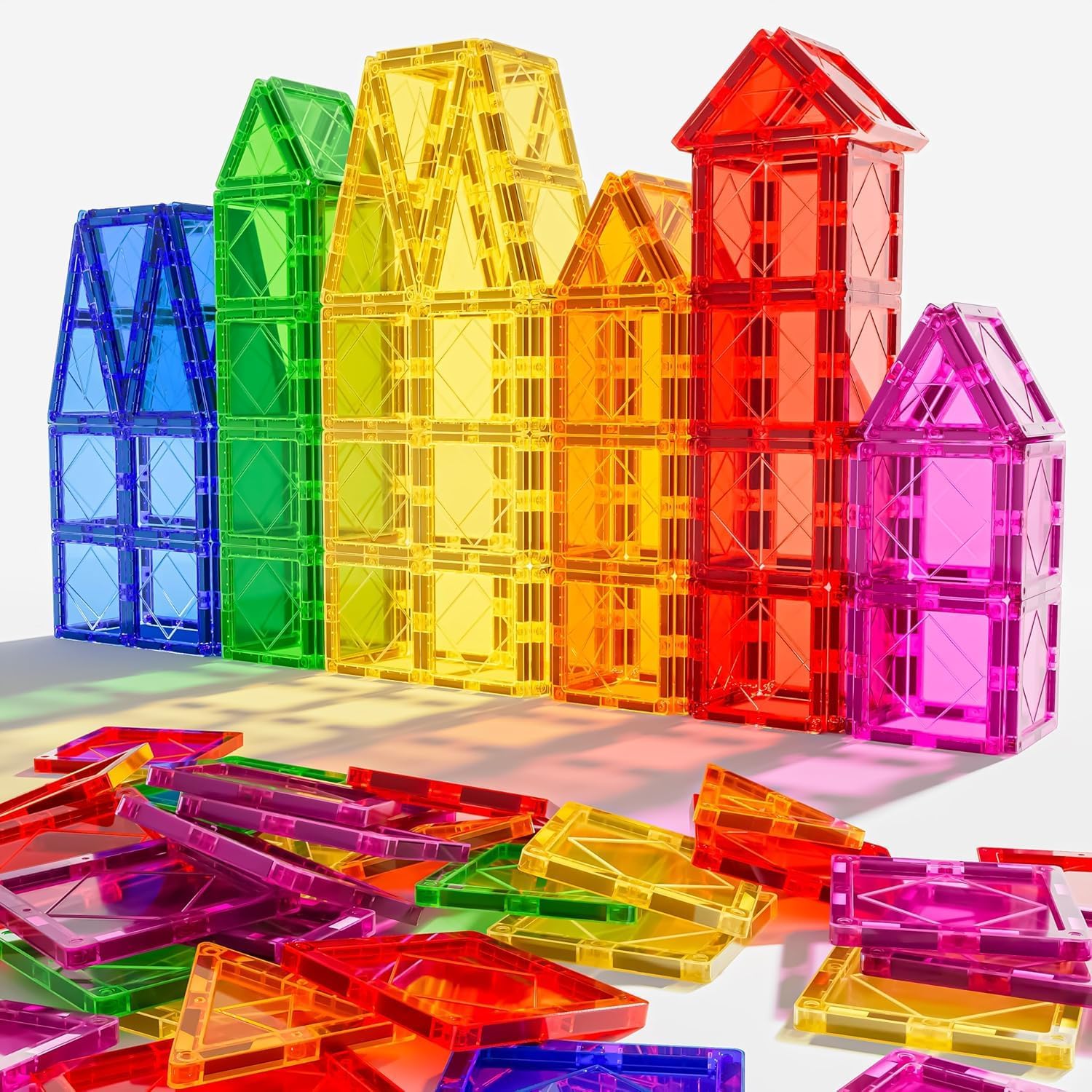
Solid-panel tiles with the same click, for builders who want walls rather than frames.